Planetarium Ticket
A practical guide to designing 플라네타륨 prompts for clear visual results.
2026.08.15
「Planetarium Ticket」を思いどおりに作りましょう自分だけの「Planetarium Ticket」を作る
ふだんの言葉で伝えるだけで、Caratが最適な画像や動画を生成します。

毎日100クレジット無料で今すぐ始められます
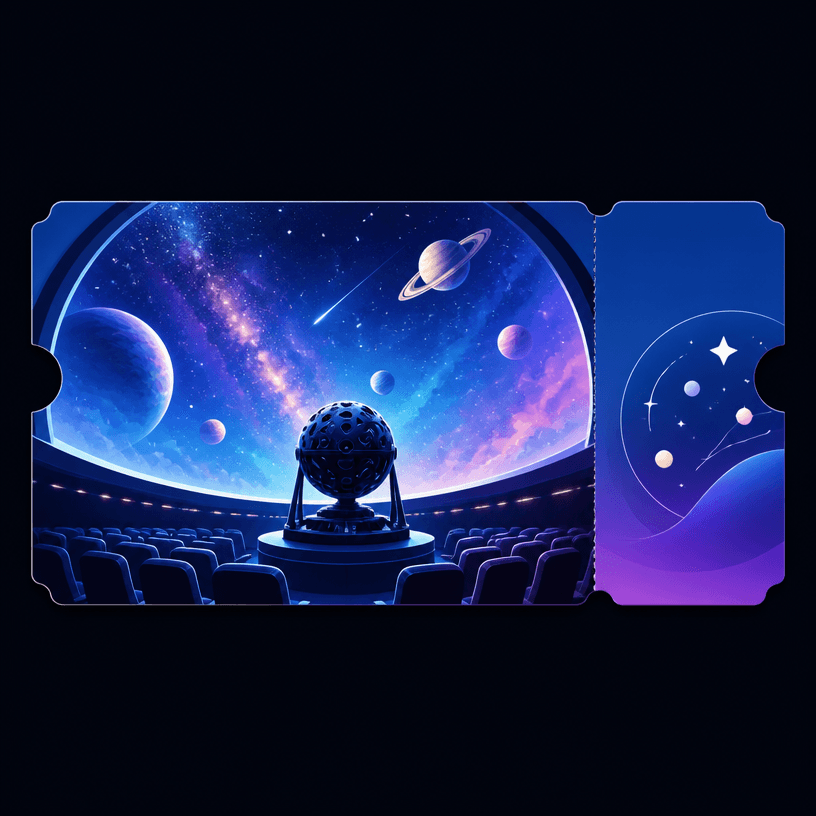
Planetarium Ticket
What Is a 플라네타륨 AI Prompt?
A 플라네타륨 prompt turns the subject and purpose into observable conditions such as title, key visual, hierarchy, palette, and placement. Instead of asking for something merely eye-catching, specify audience, key scene, headline scale, schedule and place, reading order, spacing, and output ratio. Keep dates, addresses, prices, contacts, and logos as editable content because generated copy may be inaccurate.
Practical Uses
- Promoting shops, exhibitions, and local events
- Explaining energy, environmental, and everyday information
- Presenting key details and terms on tickets, coupons, and invitations
- Showing a small business service and contact path on a card
- Advertising classes, workshops, schedules, and registration steps
Why This Tag Helps
This tag helps graphics carry both subject mood and practical information. Define the requested action first, then order headline, key image, schedule and place, supporting copy, and registration or contact path. A poster or flyer needs a short headline and one dominant scene that works from a distance. A ticket benefits from strong contrast around event name, date, seat, and usage terms. A business card should separate name, role, service, contacts, and web address. An energy guide should distinguish the key action from supporting explanation. Keep decoration separate from information through contrast, check title and next-action readability on mobile, and review physical dimensions and bleed for print. Replace generated text and logos with verified source content, then recheck dates, addresses, prices, links, and terms before publishing.
Related Prompts
business-card, small-business, process-diagram, health-infographic, wedding-card, social-media-carousel can extend the direction toward business cards, small-business promotion, process diagrams, infographics, invitation cards, and social content. Borrow one palette or spacing rule while preserving the current hierarchy.
Prompt Construction Tips
- State purpose, audience, channel, physical size, and output ratio.
- Set reading order for headline, key visual, details, and next action.
- Separate palette, contrast, spacing, type mood, and icon rules.
- Reserve fixed copy, schedules, prices, and logos for post-editing.
Check hierarchy and legibility before decoration, then change one variable such as color or texture at a time. Compare the final result with source information and confirm image, font, and reference rights before release.
よくあるご質問
Copying prompts is free, while generating images or videos with AI consumes credits.
Define purpose and audience, then specify headline, key visual, hierarchy, and channel.
Enter dates, addresses, and prices during post-editing and compare them with the source.
Separate name, date, terms, and contact details into clear blocks with contrast.
Review service terms and image, font, and reference rights.
Specify physical size and ratio separately for each channel.
Check hierarchy and legibility first, then change one variable at a time.