Own Character Art
Develop original character designs into illustrations with consistent appearance, personality, setting, and visual storytelling.
2026.07.23
把「Own Character Art」做成你想要的样子做一个你自己的「Own Character Art」
用大白话说出来就行——Carat 会为你生成合适的图片和视频。

每天 100 免费积分,现在就开始
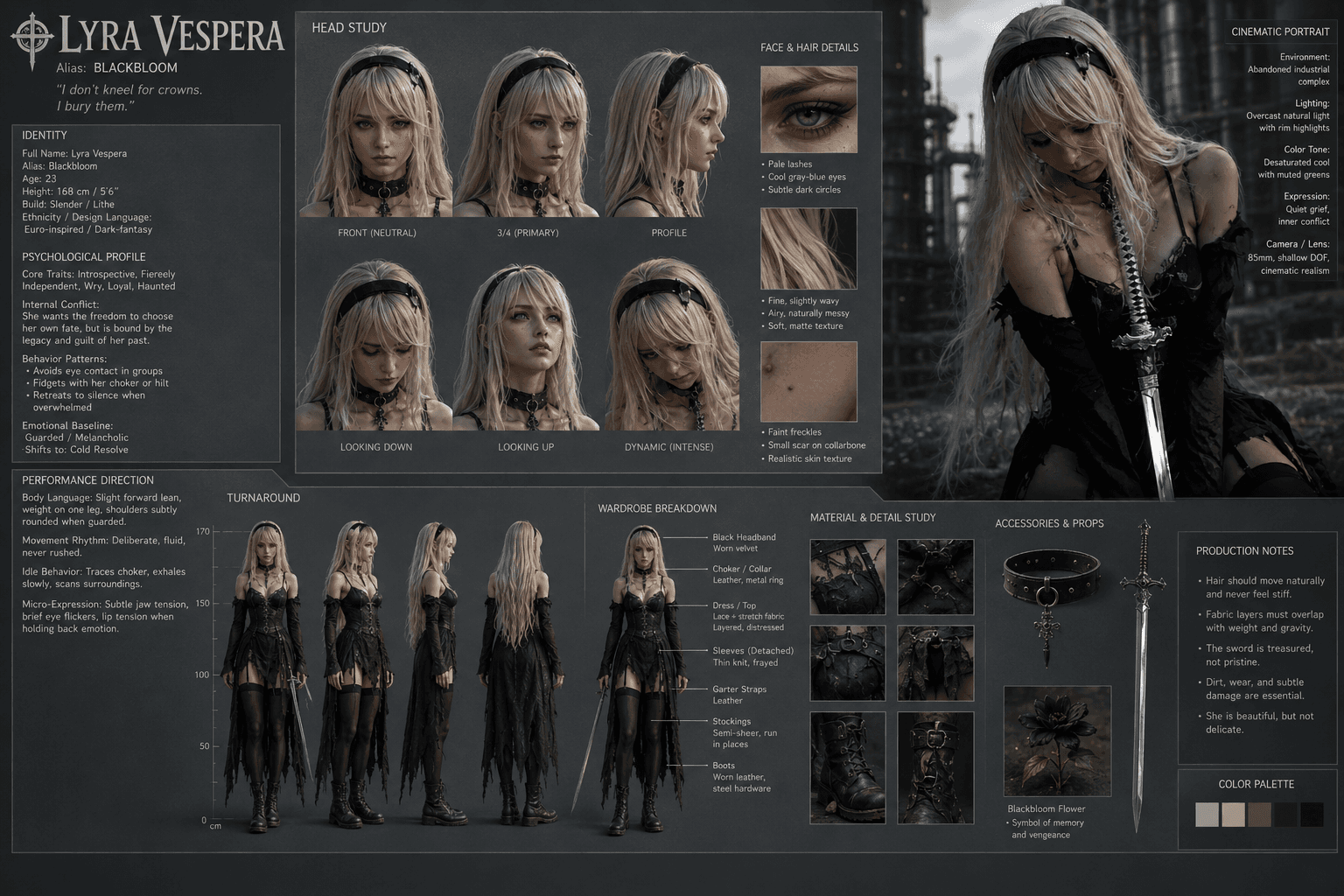
Cinematic Character Design Sheet
What Are Own Character Art Prompts?
Own character art prompts turn an original character into a recognizable visual person whose appearance, personality, role, and world belong together. Instead of listing only hair and eye colors, define what the character wants, what they protect, how they stand, and which object represents them. Observable behavior gives the image a stronger story than abstract labels alone.
Organizing the Design
Prioritize visible information such as silhouette, face shape, hairstyle, clothing layers, signature prop, shoes, gloves, and default expression. Keep a small number of fixed traits so the character remains identifiable when the background or pose changes.
Scene and Mood
Choose a location that supports the character's role: a studio, fantasy city, school corridor, spaceship, or workshop. Add time, weather, and light direction. Background color and atmosphere can reinforce whether the character feels hopeful, secretive, energetic, or tired.
Style and Composition
Decide whether the result is a game concept image, webtoon portrait, character sheet, or action illustration. A frontal portrait is useful for checking design, while a three-quarter pose and active gesture reveal personality.
Using the Result
Select the strongest identity traits from the first result and turn them into a locked reference block. Reuse the same face, outfit, prop, and palette in later scenes. Check continuity carefully, and add tiny lettering or exact emblems during post-production when needed.
常见问题
Start with visible identity traits such as silhouette, hair, face, clothing, signature prop, and a limited color palette.
Yes. Translate personality into visible behavior such as gaze, posture, hand gesture, movement, and expression.
Repeat a locked block for hair, eyes, signature outfit, accessories, and palette in every scene prompt.
Yes. Request separate front, side, and back views plus a face close-up for a practical design reference.
Specify role-related props, architectural details, location, weather, and lighting so the setting explains the character.
It can. Keep the identity block unchanged while changing linework, rendering, palette, or medium one variable at a time.
Review face and outfit silhouette, signature prop, palette, hands, feet, and whether the setting supports the worldbuilding.