Timeline Template
An AI prompt for creating a clear timeline template that presents milestones and project stages at a glance.
2026.07.17
Haz “Timeline Template” justo como lo quieresCrea tu propio “Timeline Template”
Pídelo en lenguaje natural: Carat genera imágenes y vídeos optimizados para ti.

Empieza ya con 100 créditos gratis al día
Timeline Template
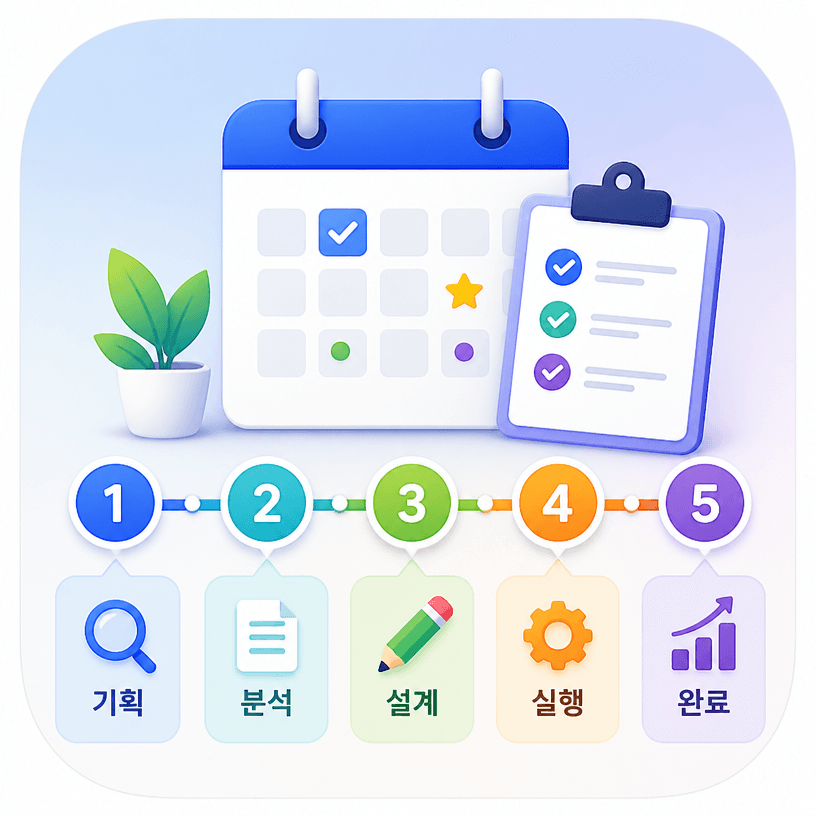
What is a timeline template AI prompt?
A timeline template AI prompt creates a visual plan that shows how a project, event, or process moves from its beginning to completion. It can arrange several connected stages, milestone markers, calendar symbols, and short description areas in one readable composition. This is useful when you need a quick concept for a project roadmap, launch schedule, campaign plan, event checklist, or learning path. By specifying the number of stages, the order of the milestones, the visual hierarchy, and the aspect ratio, you can produce a structured draft without manually positioning every element on a blank canvas.
Practical use cases
Use the prompt for product launch plans, content calendars, service development roadmaps, event preparation, onboarding sequences, or educational schedules. A single-page timeline can make a meeting discussion easier because the team can see the full sequence at once. For social content, a strong color system and simple icons can communicate the idea even when the viewer only sees a small thumbnail. You can also request a restrained palette that matches a brand guide, or choose a friendly illustrated treatment for a community announcement.
Prompting tips for a readable result
Start with the number and order of the stages. Short action-based labels such as research, plan, build, review, and launch usually create a clearer hierarchy than long sentences. State whether dates should be visible placeholders or actual values, and describe the structure as a connected line, cards, or a left-to-right flow. Generous spacing matters because crowded nodes make the sequence difficult to follow. Ask for distinct milestone icons and strong contrast rather than relying on tiny text.
Related prompts
Final review checklist
Generated images may contain incorrect dates, numbers, or small labels. Treat the first output as a visual draft, then replace important copy in a design editor before publishing. Check the contrast between the line and background, the spacing between stages, and the readability on mobile screens. This workflow keeps the speed of AI ideation while preserving accuracy in a business document or public announcement.
Preguntas frecuentes
It can organize project plans, event preparation, product launches, learning paths, and any story that depends on sequence and time.
Yes. State the number of stages and provide a short description for each one to guide the visual flow.
Small text and dates can contain errors in generated images, so verify important information and replace it in an editor.
Yes. Describe the primary color, accent color, contrast level, and overall brand mood in the prompt.
Landscape works well for slides and banners, while portrait is useful for mobile posts and long sequential plans.
Yes. Specific icons such as a calendar, check mark, light bulb, or package can help viewers understand each stage quickly.
It is best used as a structural draft first. Review facts, labels, spacing, and accessibility before using it as a final document.