Tteokbokki Character
Cute anthropomorphic tteokbokki (spicy rice cake) character illustration prompts for branding and merchandise
2026.07.04
Haz “Tteokbokki Character” justo como lo quieresCrea tu propio “Tteokbokki Character”
Pídelo en lenguaje natural: Carat genera imágenes y vídeos optimizados para ti.

Empieza ya con 100 créditos gratis al día
Tteokbokki Character
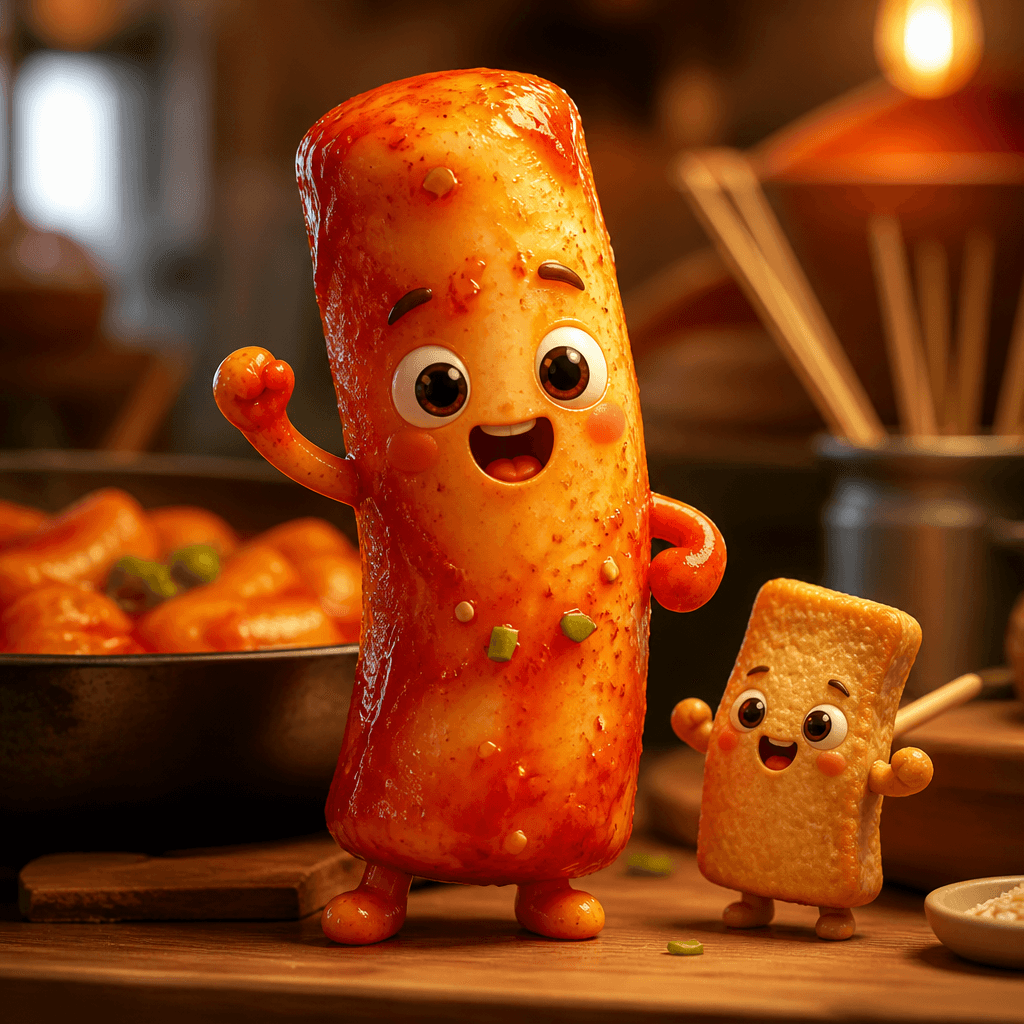
Tteokbokki characters are anthropomorphized versions of Korea's iconic street food, featuring cylindrical bodies coated in spicy red sauce with cheerful expressions. These characters reimagine Korean cuisine as adorable mascots used in food brand mascots, social media stickers, merchandise design, cafe interiors, and educational materials. Carat's prompts detail tteokbokki texture, sauce coating, and facial expressions.
Key use cases for tteokbokki characters include food brand mascots, cafe and restaurant branding, social media stickers, stationery merchandise, food festival posters, and children's educational materials. With the global popularity of K-food, international demand for tteokbokki characters is also increasing.
Style-wise, Pixar-style 3D characters provide a three-dimensional, lovable feel, while flat vector style suits merchandise design. Methods to express spiciness (bright red sauce, sweat drops, flames) and anthropomorphizing side toppings like fish cakes and green onions enrich the storytelling. Carat auto-assigns lighting, texture, and colors.
Aspect ratios can be 1:1 for social media profiles and stickers, 3:4 for posters, and 16:9 for banners. Specifying character actions (raising hands, jumping, eating) produces more dynamic results.
Use Carat's tteokbokki character prompts to create lovable characters with Korean charm. They can be used across brand mascots, merchandise, social media, and more.
Preguntas frecuentes
They are used in food brand mascots, cafe branding, social media stickers, merchandise design, food festival posters, and children's educational materials.
Pixar-style 3D characters for a lovable feel, flat vector style for merchandise design are recommended.
Yes, adding side toppings like fish cakes and green onions in the subject description creates anthropomorphized companion characters.
Including bright red sauce, sweat drops, and flame elements in the prompt visually represents the level of spiciness.
1:1 for social media and stickers, 3:4 for posters, and 16:9 for banners are recommended.
Yes, specifying actions like raising hands, jumping, or eating in the subject description generates dynamic characters.
Images generated through Carat can be used for commercial purposes.