Fillers Cut Hairstyle
Practical image prompt guidance for Fillers Cut Hairstyle.
2026.08.13
Fais « Fillers Cut Hairstyle » exactement comme tu veuxCrée ton propre « Fillers Cut Hairstyle »
Demande-le simplement — Carat génère pour toi des images et des vidéos optimisées.

Commence maintenant avec 100 crédits gratuits par jour
Aucun prompt disponible
Fillers Cut Hairstyle prompt direction
When expressing 가볍게 층을 낸 얼굴선과 자연스러운 볼륨을 살린 헤어 레퍼런스, specify visible structure and material rather than relying on vague mood words. Fix subject count and framing first, then add topic-specific variables such as line density, expression, or layering so results can be compared. This page provides practical criteria for gallery references and image prompt design.
Structure and framing
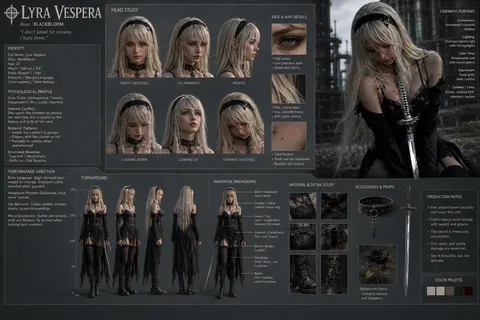
For zentangle art, contrast central density with outer breathing room and balance spirals, leaves, teardrops, and geometric patterns. For a brainrot character image, combine an incompatible object and creature while simplifying the silhouette so it reads as one full-body character. For a fillers cut hairstyle, center one adult subject's head and shoulders in a three-quarter view where airy face-framing layers remain visible.
Line and texture
Specify consistent black ink lines and warm ivory paper grain for a hand-drawn zentangle rhythm. For brainrot, distinguish smooth 3D surfaces, glass panels, and sneaker rubber to make the render playful. For the hairstyle reference, describe separated strands, light layered ends, and natural volume to avoid clumped hair.
Color and mood
Use a limited black and warm-paper palette for calm focus in zentangle. Use lemon yellow, cyan, cherry red, and charcoal to emphasize the impossible combination in brainrot. Use dark brown hair with subtle chestnut highlights, a pale gray background, and soft window light from camera left for a realistic salon-reference mood.
Variations and review
Change one axis at a time, such as pattern density, character expression, or layer length. Check that lines do not break or collide, no extra character appears, and hair around the face connects naturally. Before release, inspect for watermarks, unrelated text, logos, and severe distortions.
Questions fréquentes
Fix subject count and the overall layout first, then specify line, color, and texture in that order.
State viewpoint, aspect ratio, and margin size so the subject is not cropped.
Name visible materials such as paper grain, ink density, 3D surface, or separated hair strands.
Choose a limited palette with clear contrast and restrict where the accent color appears.
Keep the base composition and change only pattern density, expression, or layer length.
Check subject count, line joins, face-framing layers, unintended text, and logos.
Change the use case and background first while keeping the core subject structure and proportions comparable.