Bisque Doll Illustration
Prompts for original bisque doll illustrations with matte ceramic surfaces, glass eyes, hand-painted features, and delicate clothing.
2026.08.28
Make “Bisque Doll Illustration” exactly the way you wantCreate your own “Bisque Doll Illustration”
Just ask in plain language — Carat generates optimized images and videos for you.

Start now with 100 free credits daily
Bisque Doll Illustration
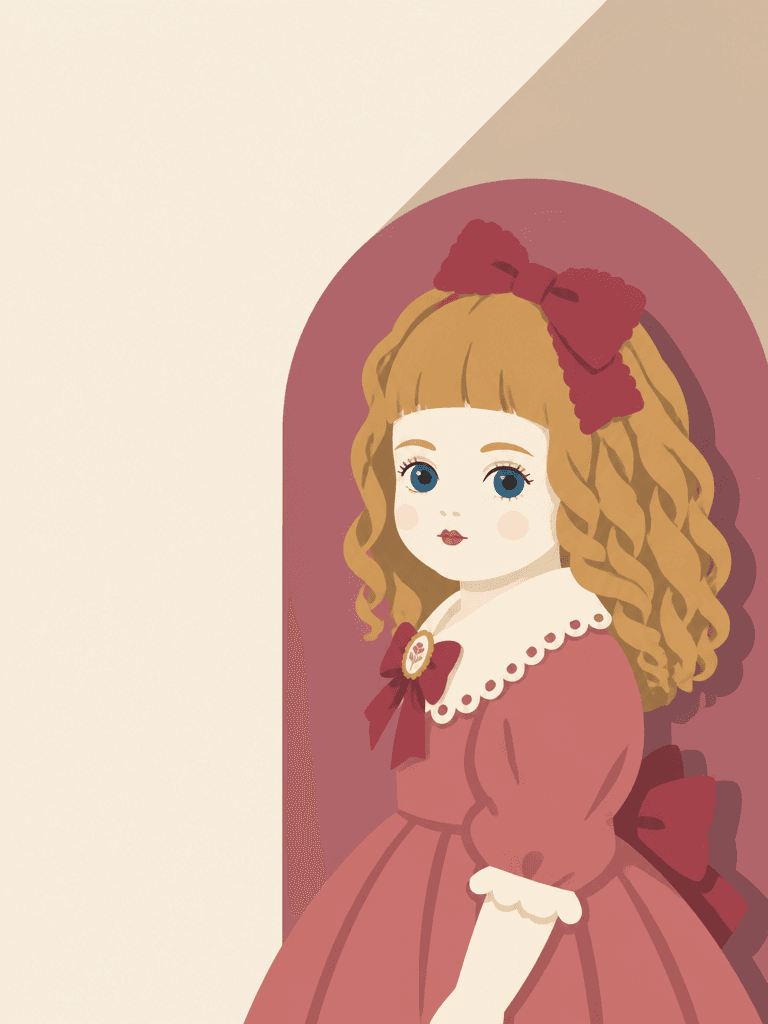
Bisque doll illustration prompts should distinguish matte ceramic material from glossy plastic and describe the doll's face, hair, clothing, and display setting as separate layers. Mention an ivory bisque surface, glass-like eyes, hand-painted brows and lips, a fixed expression, and clothing with visible construction such as a lace collar, ribbon, or Victorian-inspired dress. A front-facing pose makes the facial design and outfit easy to study, while a three-quarter view reveals the nose, cheek volume, and overlapping garments. Keep the environment simple: a studio shelf, neutral paper backdrop, or wooden atelier table can provide context without taking attention from the doll. Choose one direction, such as vintage collectible, Victorian, modern studio object, or fairy-tale editorial, so the palette and ornament density remain coherent. Describe an original doll design instead of naming a copyrighted character. A close portrait emphasizes the eyes and painted details, while a full-body frame shows the dress, shoes, and complete silhouette. Cream, dusty rose, muted blue, and soft gray create a restrained collection palette, with a small accent on ribbon or metal trim. For multiple images, lock the face proportions and hair silhouette while changing the pose or display setting. If the porcelain impression becomes weak, reduce hard reflections and emphasize matte surface, still posture, subtle paint traces, and delicate ceramic edges. These prompts are useful for character references, collectible concept art, editorial illustrations, and product mood boards.