Contest Poster
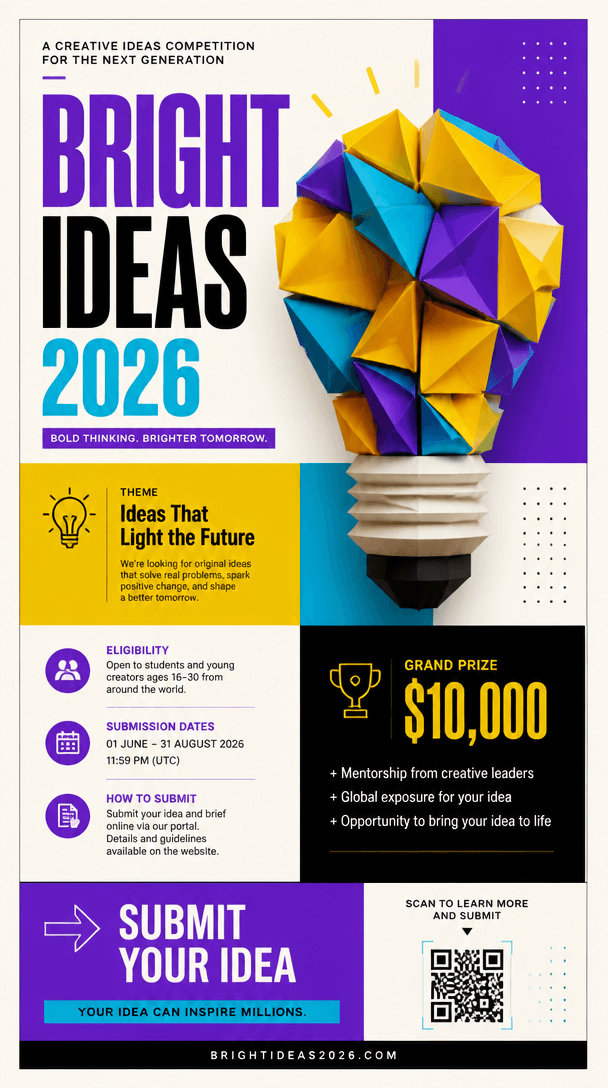
Design contest posters with AI that clearly present the theme, eligibility, submission period, awards, and entry method.
2026.07.15
Make “Contest Poster” exactly the way you wantCreate your own “Contest Poster”
Just ask in plain language — Carat generates optimized images and videos for you.

Start now with 100 free credits daily
공모전 포스터
What Is a Contest Poster AI Prompt?
Design contest posters with AI that clearly present the theme, eligibility, submission period, awards, and entry method. A useful prompt defines the main silhouette, expression or material, spacing, and background instead of naming the subject alone. These instructions give the image model a stable visual target and produce an asset that is easier to reuse.
Designing the Visual Language
Contest promotion needs both a creative first impression and precise entry information. A symbolic object attracts attention, while separate blocks for deadline, eligibility, prize, and submission CTA turn interest into completed entries. Sticker-style assets benefit from one focal subject, clean edges, restrained color, and enough negative space. Check the result at thumbnail size because fine details that look attractive at full resolution may disappear in chat or mobile interfaces.
Practical Uses
This format works for design and photography competitions, idea calls, student challenges, public campaigns, internal innovation programs, and local creator opportunities. Keep the core proportions and rendering rules fixed when building a set, then vary expression, accent color, or surface treatment. This method creates variety without losing visual consistency across channels.
Prompt Construction Tips
Make the event name and deadline the first read, then separate eligibility from submission specifications. Emphasize the prize without hiding essential details, and pair the QR area with a direct submission instruction. Describe lighting direction, surface texture, viewing angle, and background color with concrete terms. Avoid mixing conflicting art styles. After the first generation, lock the successful geometry and adjust only one variable at a time so you can identify what improved the result.
Related Prompt Ideas
Use neighboring themes to plan a coordinated asset family while keeping this topic visually distinct. Review the final image at its actual display size, confirm that the silhouette and focal detail survive reduction, and regenerate with wider padding or softer reflections if edges or highlights become distracting.