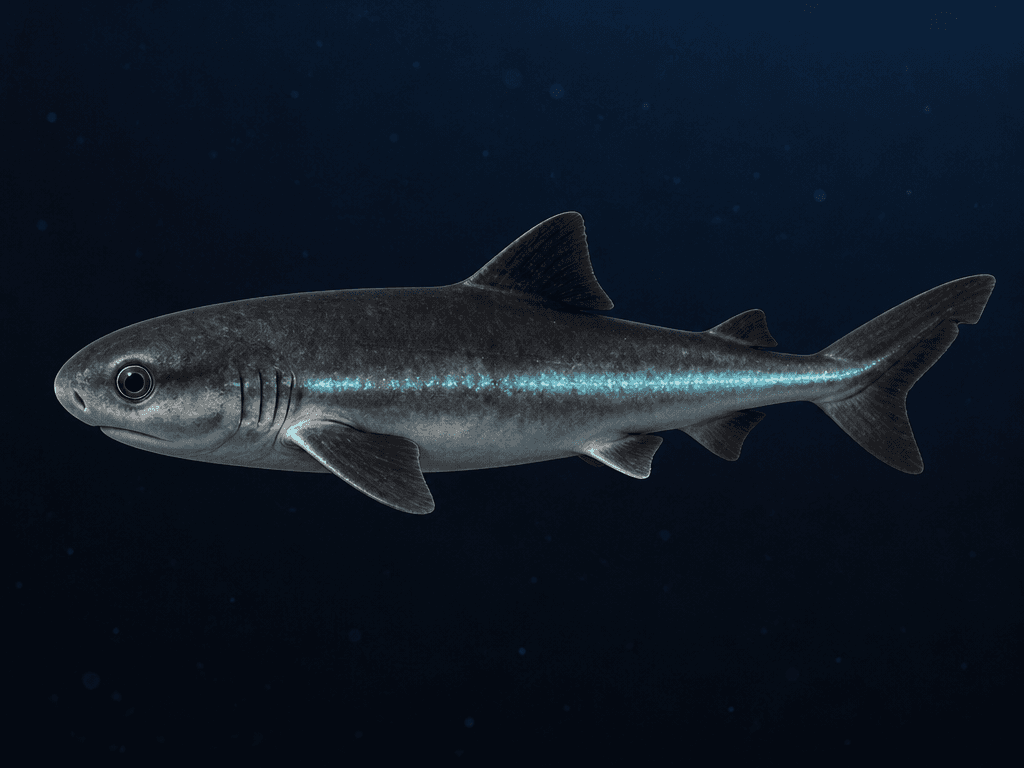
Cookiecutter Shark Illustration
Prompts for illustrating the cookiecutter shark with its rounded silhouette, deep-sea setting, and subtle bioluminescent details.
2026.08.28
Make “Cookiecutter Shark Illustration” exactly the way you wantCreate your own “Cookiecutter Shark Illustration”
Just ask in plain language — Carat generates optimized images and videos for you.

Start now with 100 free credits daily
Cookiecutter Shark Illustration
Cookiecutter shark illustration prompts should make the species readable instead of producing a generic large shark. Describe the rounded head, short snout, compact cylindrical body, dark upper surface, and lighter underside before choosing an art direction. A restrained turquoise glow along the underside can suggest its bioluminescent organs and immediately place the animal in a deep-sea environment. Keep the mouth and teeth observational rather than horror-focused when the image is intended for a field guide, museum graphic, or educational card. A nearly black ocean with sparse particles and a quiet blue gradient gives the silhouette room to read. A side profile is useful for a scientific plate, while a three-quarter view can work for an original mascot or story illustration if the species proportions remain recognizable. Choose watercolor natural history, flat vector, ink plate, or soft 3D render as a separate visual decision, and avoid naming a living artist or copying a particular reference image. For a set, lock the body proportions and glow color while varying the depth, camera angle, and seafloor. Specify fin placement, eye position, tooth scale, and the boundary between dorsal and ventral color so the result does not collapse into a generic shark icon. Leave room around the animal for labels or cropping, but request no baked-in text or logos. This approach supports marine education, original character concepts, editorial science artwork, and hobby projects without losing the defining visual clues of the species.