Learn how to create hoodie mockups with a blank logo area, visible fabric texture, and clean product presentation using AI prompts.
2026.07.17
Make “Hoodie Mockup” exactly the way you wantCreate your own “Hoodie Mockup”
Just ask in plain language — Carat generates optimized images and videos for you.

Start now with 100 free credits daily
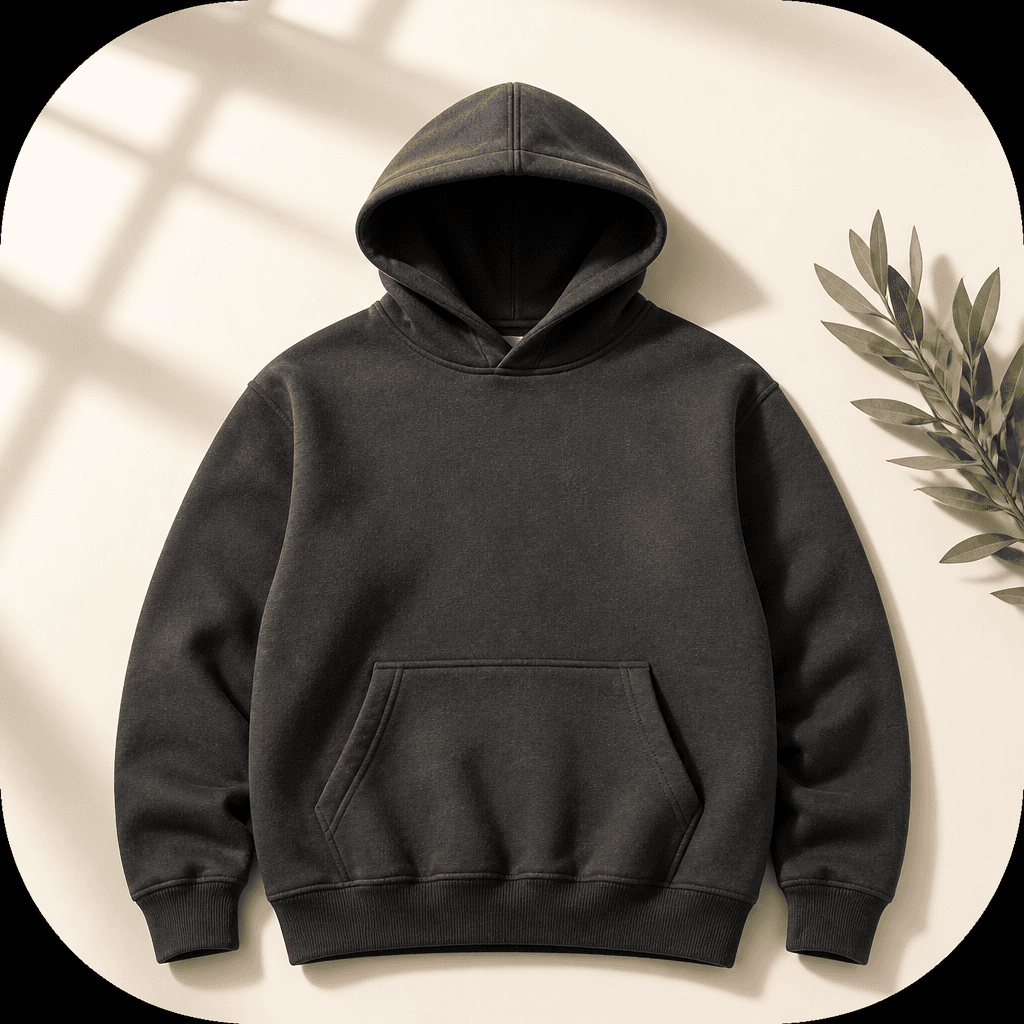
AI prompts for hoodie mockups help apparel teams preview a garment before applying final artwork or producing a physical sample. A well-directed prompt can show the hood opening, aligned sleeves, ribbed cuffs and hem, fleece texture, and a clean chest area reserved for branding in one consistent product image. Streetwear labels, independent designers, and online sellers can use the result for collection planning, product-page concepts, launch teasers, and client presentations. Instead of describing only a color, specify the material, silhouette, camera viewpoint, background, and light direction so the image communicates a usable product concept rather than a generic sweatshirt.
The silhouette and the reserved artwork area are the most important parts of a hoodie mockup. Describe the fabric as heavyweight cotton or fleece, then add structural terms such as an open hood, aligned sleeves, ribbed cuffs, and a defined hem. A front-facing flat lay makes graphic placement easy to compare, while a slight top-down product view reveals seams and contact shadows. Use an ivory or warm gray background for contrast, and describe soft window light from the upper left when you want the fabric to read naturally. Asking for a blank chest area before adding the real logo also reduces accidental lettering and brand-like marks.
An AI mockup is a concept visual, not a production-ready print file. Before manufacturing, verify the logo scale, color values, seam placement, fabric behavior, and printable area in the original design file. For color comparisons, keep the same camera angle, lighting, and background while changing only the garment color. If meaningless lettering appears, request a fully blank logo zone or place the final artwork during post-production.
A consistent prompt structure makes it easier to compare variants and communicate decisions with a team. Keep product claims accurate when using the image in commerce, especially if the generated garment does not exactly match the physical item.