Lettering Design
Practical image prompt guidance for Lettering Design.
2026.08.13
Make “Lettering Design” exactly the way you wantCreate your own “Lettering Design”
Just ask in plain language — Carat generates optimized images and videos for you.

Start now with 100 free credits daily
No prompts available
Lettering Design prompt direction
When creating 붓글씨 형태의 커스텀 타이포그래피와 여백을 활용한 포스터, describe observable structure before vague mood. Set subject count, aspect ratio, central framing, and color count before adding material and light, making results easier to compare. This page explains practical criteria for building usable visual references.
Subject and framing
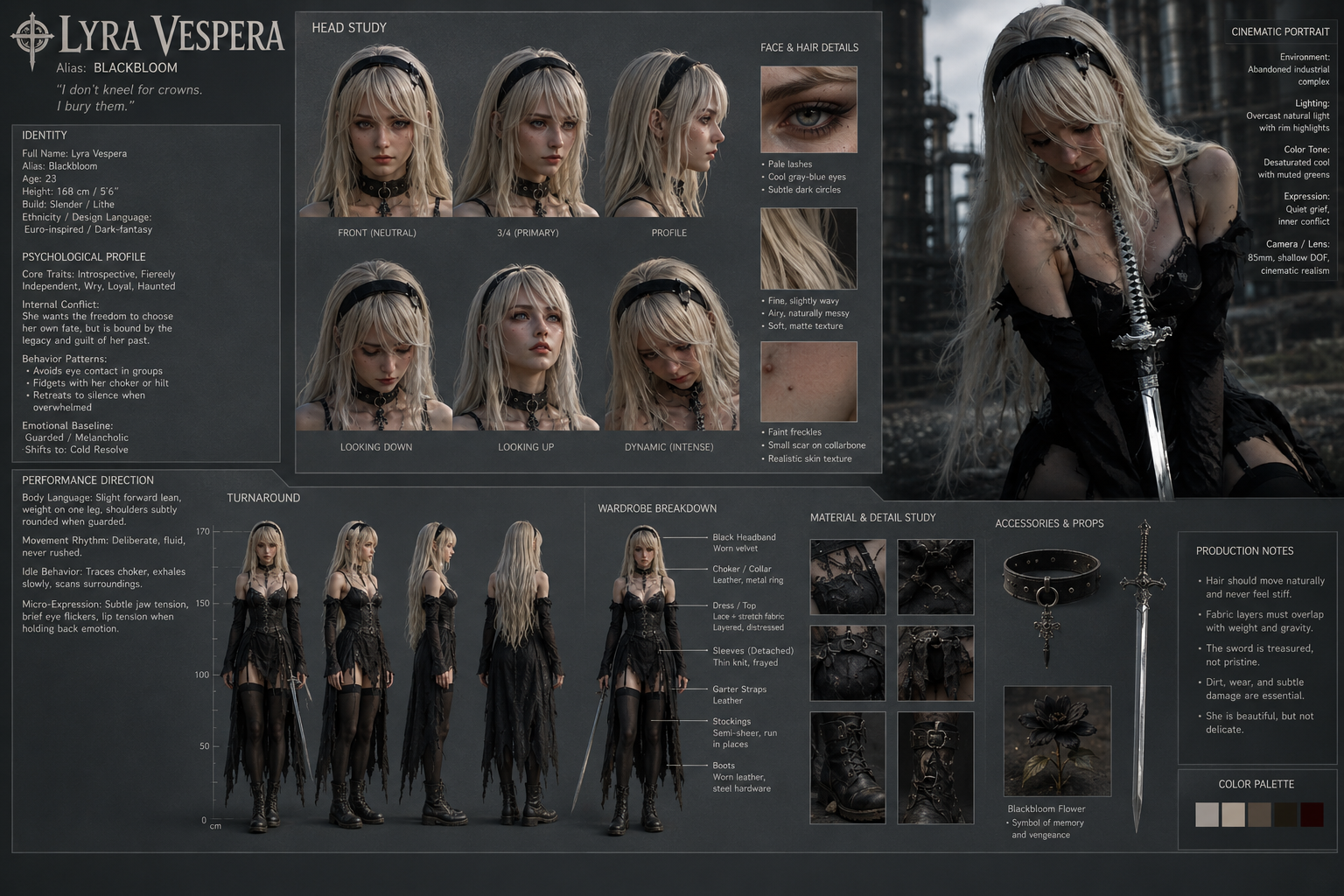
A clothing-fold reference should place one adult figure in a near-full-body view and enlarge areas such as a sleeve, elbow, or trouser knee in supporting insets. Menhera fashion benefits from a three-quarter full-body view that keeps one adult silhouette and the black-and-pink layers visible together. Lettering design should keep the phrase central with generous negative space around decorative marks.
Material and detail
Describe garment folds through directional lines and values for shoulder pull, elbow tension, waist and knee compression, and gathered hems. Specify the overlap of cardigan, blouse, and skirt, repeated bows, and small metal-accessory reflections for the fashion prompt. For lettering, define brush starts and endings, stroke-weight variation, and paper grain to establish handwritten rhythm.
Color and lighting
Use warm paper, graphite gray, and restrained accent colors for the drawing reference. Use pale pink and black with diffused overcast light for the menhera fashion look so trims and materials remain visible. For the lettering poster, place black type with coral and cobalt accents on cream paper to maximize phrase contrast.
Variations and review
Change one variable at a time: pose or fabric weight for folds, bow density or skirt length for fashion, and stroke angle or decoration count for lettering. Review hand and garment connections, missing letters, unexpected logos, and watermarks before release.