Pencil Emoji
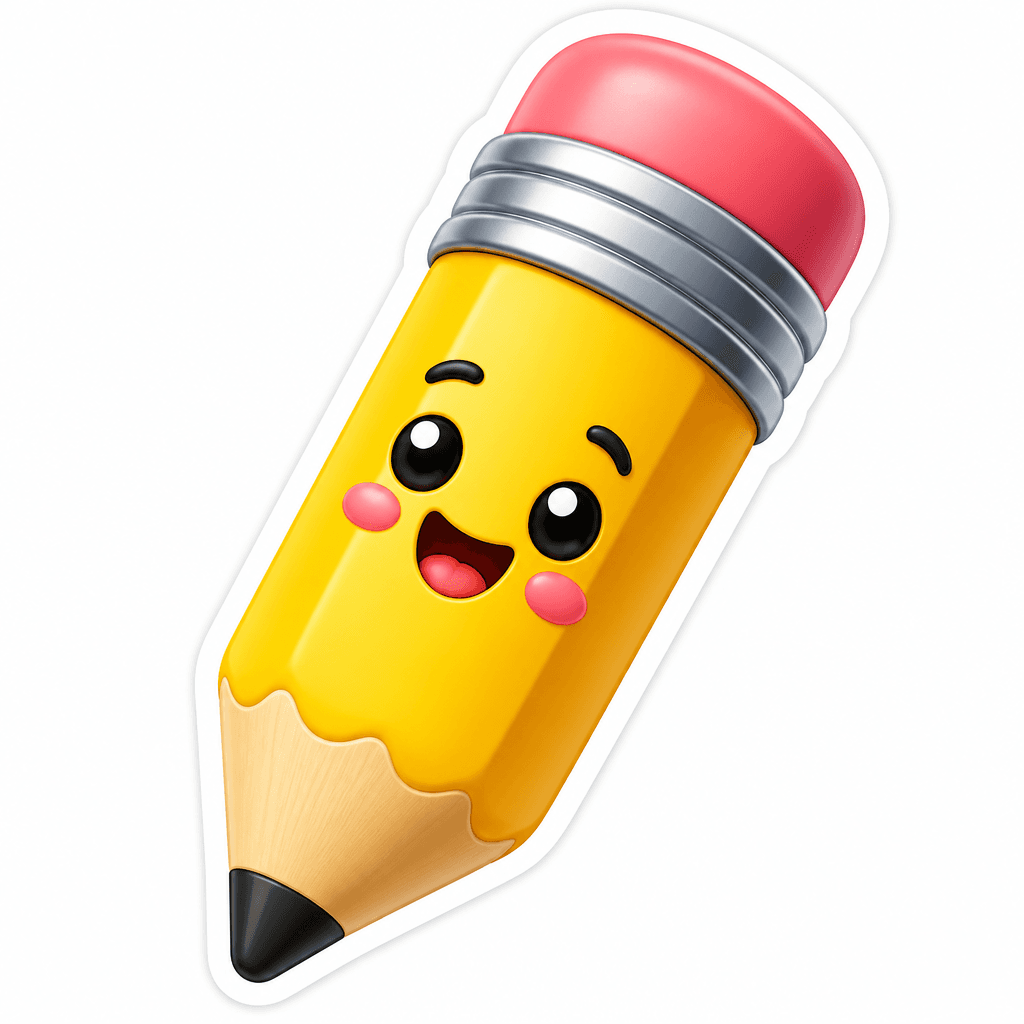
Create a readable pencil emoji for study, writing, and note-taking contexts with a simple expressive face.
2026.07.15
Make “Pencil Emoji” exactly the way you wantCreate your own “Pencil Emoji”
Just ask in plain language — Carat generates optimized images and videos for you.

Start now with 100 free credits daily
연필 이모지
What Is a Pencil Emoji AI Prompt?
Create a readable pencil emoji for study, writing, and note-taking contexts with a simple expressive face. A useful prompt defines the main silhouette, expression or material, spacing, and background instead of naming the subject alone. These instructions give the image model a stable visual target and produce an asset that is easier to reuse.
Designing the Visual Language
Separate the hexagonal barrel, exposed wood, graphite tip, metal ferrule, and eraser so the object reads instantly as a pencil. Sticker-style assets benefit from one focal subject, clean edges, restrained color, and enough negative space. Check the result at thumbnail size because fine details that look attractive at full resolution may disappear in chat or mobile interfaces.
Practical Uses
This format works for study updates, to-do lists, teacher resources, note-app icons, and stationery-brand stickers. Keep the core proportions and rendering rules fixed when building a set, then vary expression, accent color, or surface treatment. This method creates variety without losing visual consistency across channels.
Prompt Construction Tips
Use a diagonal pose and bold outline, place the face near the barrel center, and omit unnecessary limbs that weaken the silhouette. Describe lighting direction, surface texture, viewing angle, and background color with concrete terms. Avoid mixing conflicting art styles. After the first generation, lock the successful geometry and adjust only one variable at a time so you can identify what improved the result.
Related Prompt Ideas
Use neighboring themes to plan a coordinated asset family while keeping this topic visually distinct. Review the final image at its actual display size, confirm that the silhouette and focal detail survive reduction, and regenerate with wider padding or softer reflections if edges or highlights become distracting.