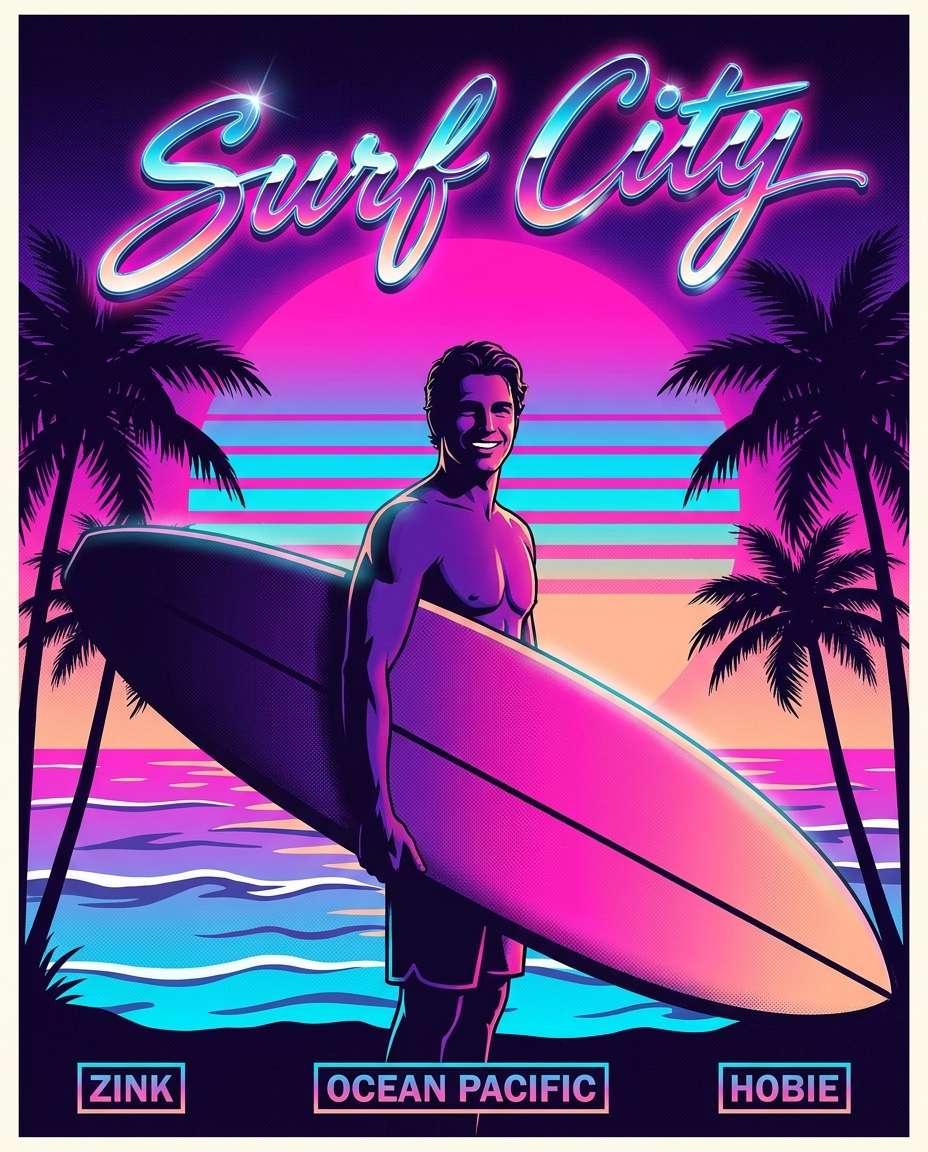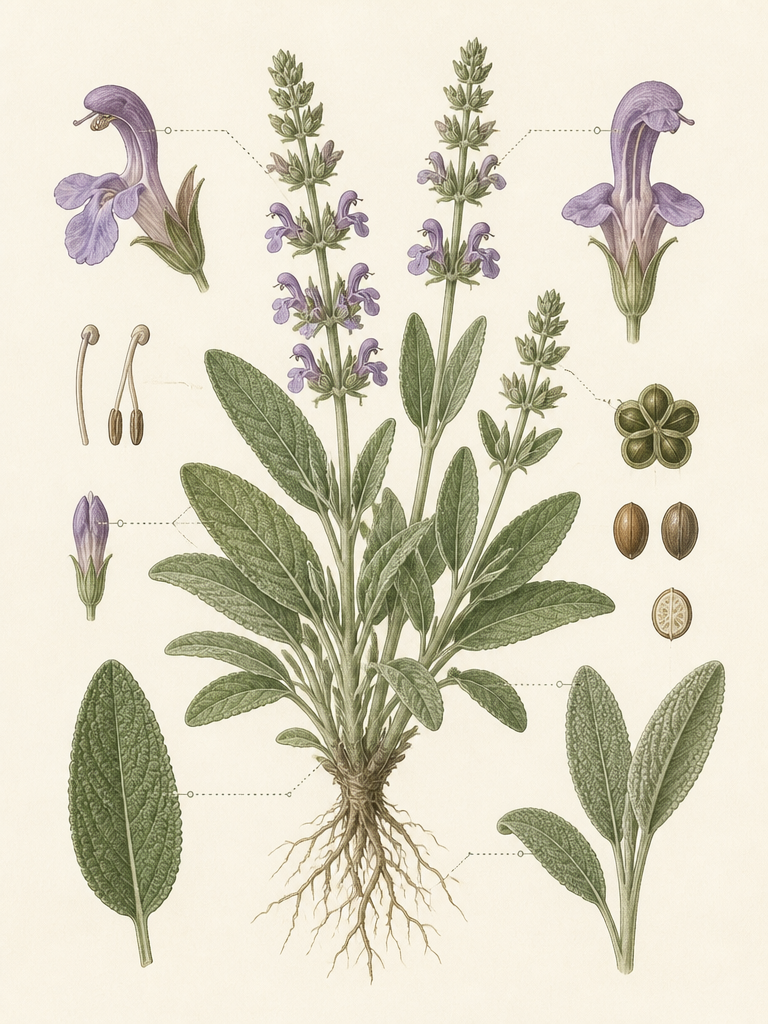
Performance Poster
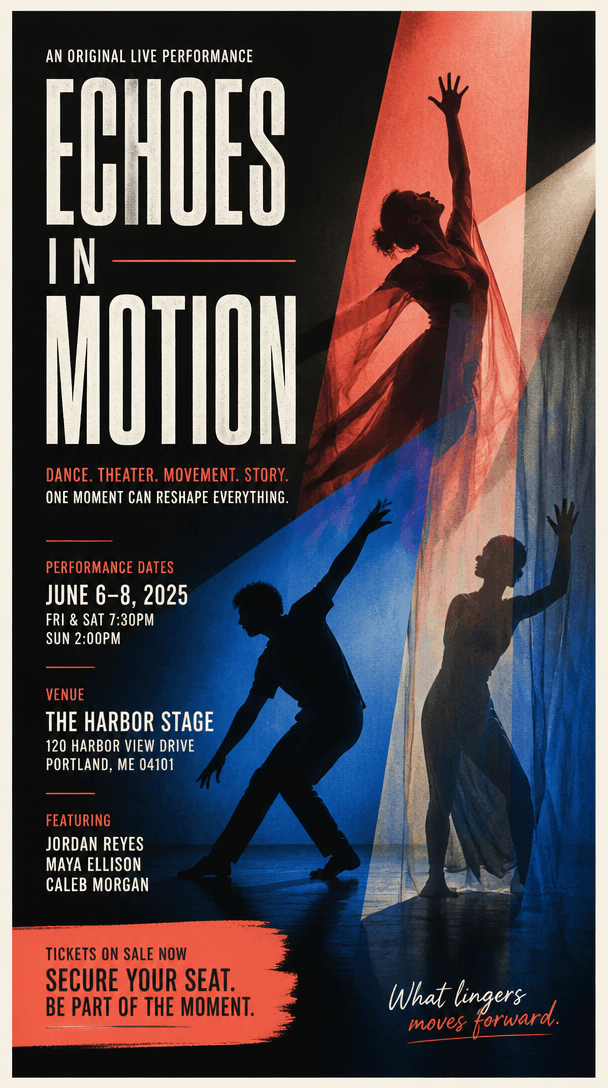
Design performance posters with AI that capture the atmosphere of theater, dance, and multidisciplinary arts while presenting essential audience information.
2026.07.15
Make “Performance Poster” exactly the way you wantCreate your own “Performance Poster”
Just ask in plain language — Carat generates optimized images and videos for you.

Start now with 100 free credits daily
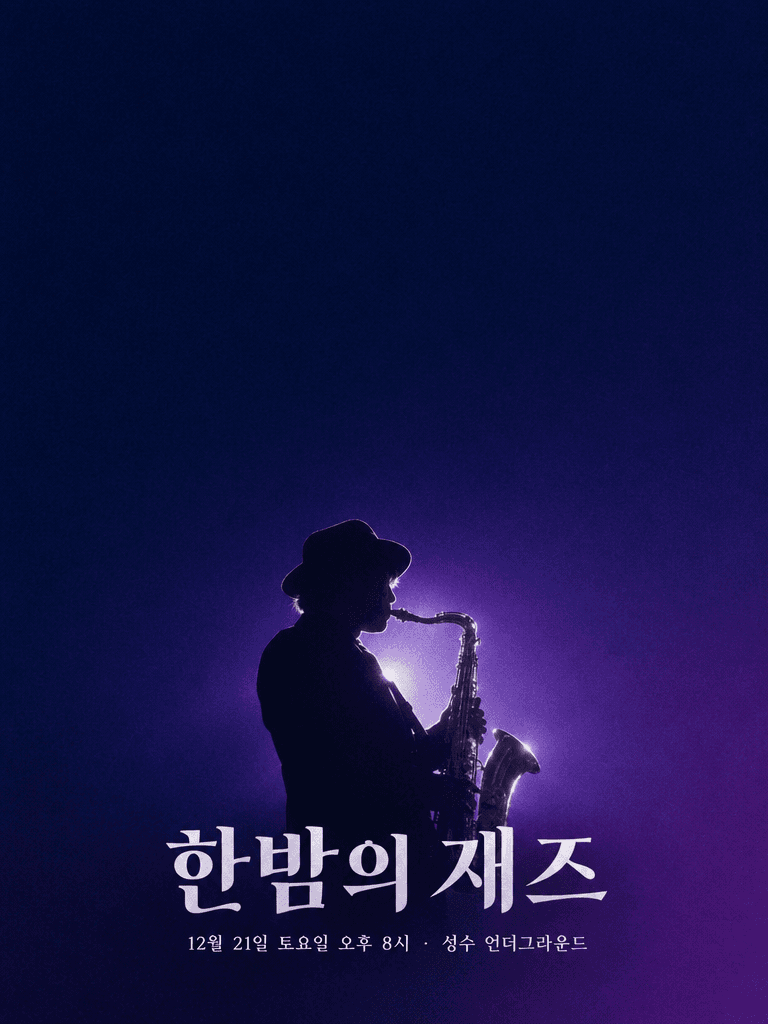
Late Night Jazz Concert Poster
공연 포스터
What Is a Performance Poster AI Prompt?
Design performance posters with AI that capture the atmosphere of theater, dance, and multidisciplinary arts while presenting essential audience information. A useful prompt defines the main silhouette, expression or material, spacing, and background instead of naming the subject alone. These instructions give the image model a stable visual target and produce an asset that is easier to reuse.
Designing the Visual Language
Performance promotion must communicate emotion and practical details at once. Stage lighting and performer movement establish genre, while a clear hierarchy for title, schedule, venue, and booking helps audiences understand an unfamiliar production quickly. Sticker-style assets benefit from one focal subject, clean edges, restrained color, and enough negative space. Check the result at thumbnail size because fine details that look attractive at full resolution may disappear in chat or mobile interfaces.
Practical Uses
This format works for theater premieres, contemporary dance showcases, university productions, local arts festivals, multidisciplinary projects, and small-theater seasons. Keep the core proportions and rendering rules fixed when building a set, then vary expression, accent color, or surface treatment. This method creates variety without losing visual consistency across channels.
Prompt Construction Tips
Use a representative movement as a silhouette and limit stage colors to two or three. Make the title dominant, group date and venue, and separate cast credits from the booking CTA at the bottom. Describe lighting direction, surface texture, viewing angle, and background color with concrete terms. Avoid mixing conflicting art styles. After the first generation, lock the successful geometry and adjust only one variable at a time so you can identify what improved the result.
Related Prompt Ideas
Use neighboring themes to plan a coordinated asset family while keeping this topic visually distinct. Review the final image at its actual display size, confirm that the silhouette and focal detail survive reduction, and regenerate with wider padding or softer reflections if edges or highlights become distracting.