Semi-Realistic Style Transformation
Prompts for turning photos or characters into natural semi-realistic images.
2026.08.14
Make “Semi-Realistic Style Transformation” exactly the way you wantCreate your own “Semi-Realistic Style Transformation”
Just ask in plain language — Carat generates optimized images and videos for you.

Start now with 100 free credits daily
No prompts available
What is semi-realistic style transformation?
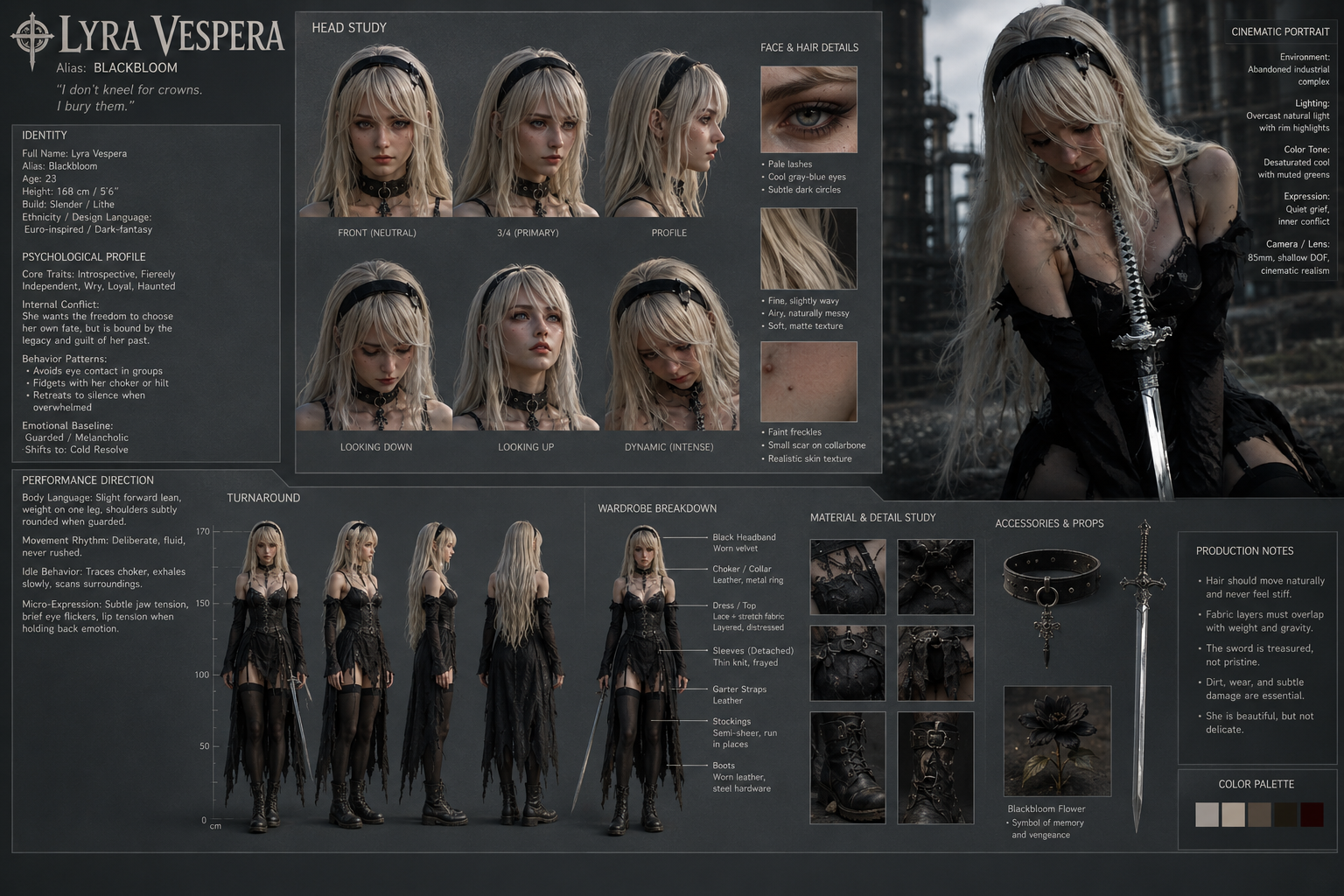
Semi-realistic style transformation combines the recognizable structure of a photo or character with the controlled finish of digital illustration. The face shape, hair silhouette, clothing colors, and expression remain readable, while skin texture, hair strands, material response, and light are rendered with greater artistic control. It is useful when a result should feel more polished than a snapshot but less exaggerated than a cartoon. The approach works especially well for profile portraits, character references, and a consistent visual series.
Decide what to preserve
Separate fixed traits from creative changes before writing the prompt. Name the face shape, eyebrow direction, hair length, signature clothing, and expression as preserved features. Then describe the brush texture, background, palette, and lighting as transformation choices. This prevents the model from replacing the subject with a generic face and makes the converted image feel connected to the reference.
Lighting and surface detail
A soft overhead key light can shape the forehead and cheekbones, while a restrained rim light separates hair from the background. Ask for natural skin texture and controlled highlights instead of a plastic surface. Naming materials such as denim, cotton, knit, or leather also helps the model create different folds and reflections. A quiet background keeps these details from competing with the face.
Practical uses
Use this direction for social profile portraits, web-novel or game character introductions, video concept art, and coordinated portraits for a couple or team. For a series, lock the hairstyle silhouette, signature colors, and facial structure, then vary the pose, scene, or crop. Specify upper-body or full-body framing according to the intended placement so the model does not hide important design details.
Prompt writing tips
Start with the reference subject and the traits that must remain recognizable. Follow with semi-realistic digital illustration, natural facial proportions, surface texture, lighting, and camera composition. If the result becomes too 3D, reduce plastic gloss and request painterly texture. If it becomes vague, add a clean silhouette and a simple background. Finish by excluding unnecessary logos and watermarks so the image remains adaptable.