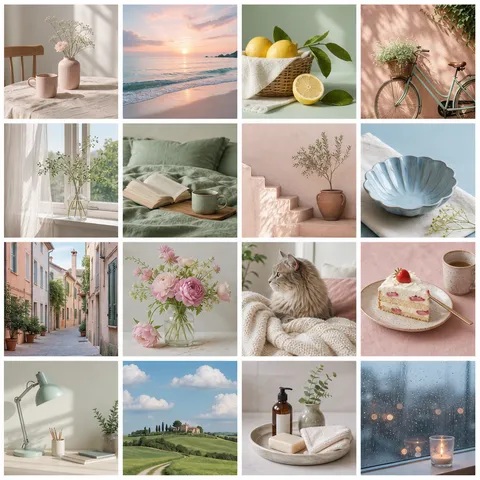
Create refreshing summer banners with citrus, blue skies, waves, and botanical accents for brand promotions, events, and seasonal campaigns.
2026.07.22
Make “Summer Banner” exactly the way you wantCreate your own “Summer Banner”
Just ask in plain language — Carat generates optimized images and videos for you.

Start now with 100 free credits daily
No prompts available
Summer banner AI prompts use visual language such as blue skies, sunlight, citrus, waves, and botanical accents to create refreshing seasonal graphics. They are useful for shopping promotions, cafe drink launches, travel offers, outdoor events, and vacation campaigns that need to attract attention quickly. Unlike a poster, a banner often uses a wide layout and short copy, so the prompt should describe the negative space, visual direction, and output ratio as well as the color palette.
A summer banner must communicate freshness and an offer in a brief glance. A large field of blue can feel cold or generic, while lemon yellow, orange, or fresh green adds energy and contrast. Leaving a defined area for copy makes it easier to add a price, date, button, or campaign message later. Waves and curved shapes create motion, while fruit and plant silhouettes make the summer theme recognizable even on a small screen.
The same summer concept can feel different depending on the audience and product. Iced drinks benefit from bright fruit and condensation, while a travel campaign may need a broad sky and a clean horizon. Sports events can use strong diagonals and a sense of speed, whereas a premium resort may require fewer elements, softer light, and more breathing room. Flat illustration is often effective for small banners because shapes remain clear and brand colors are easy to control. After generation, place the real campaign copy and test the design at both desktop and mobile widths. Check that buttons, prices, and dates do not collide with decorative objects or disappear near the crop edge.
Generate several variations with the same palette but different focal positions so you can adapt one concept to multiple placements. Keep the headline area consistent across the set to create a recognizable campaign system. If the final banner includes a product photograph, use the generated image as a background layer and add the product, legal copy, and call to action separately. This workflow reduces spelling problems and gives you control over accessibility, contrast, and responsive cropping.