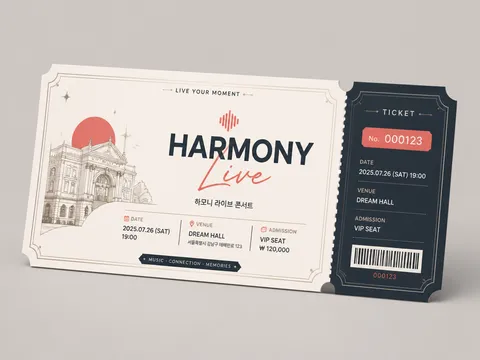
Ticket Mockup
Ticket mockup prompts for presenting concert, exhibition, cinema, festival, and event ticket designs as realistic graphics.
2026.07.17
Fais « Ticket Mockup » exactement comme tu veuxCrée ton propre « Ticket Mockup »
Demande-le simplement — Carat génère pour toi des images et des vidéos optimisées.

Commence maintenant avec 100 crédits gratuits par jour
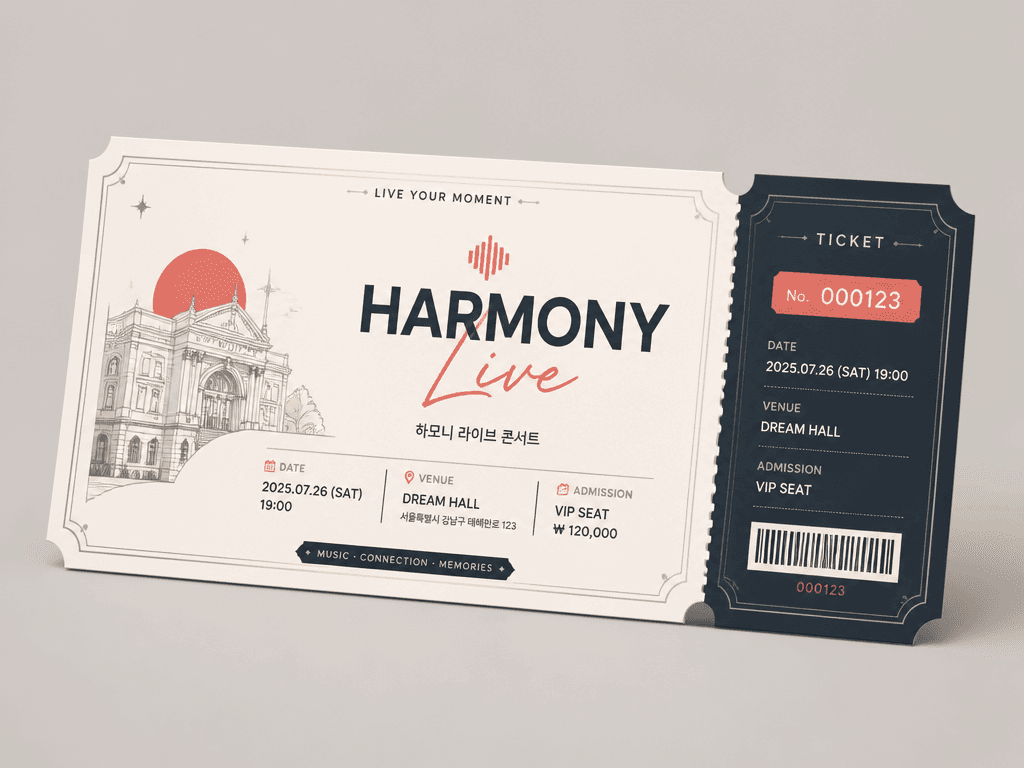
Ticket Design
What are ticket mockup AI prompts?
Ticket mockup AI prompts are instructions for presenting a ticket design as a physical print, a handheld invitation, or a mobile pass. They can define the ticket ratio, perforation, information hierarchy, barcode area, paper stock, finish, and the setting in which the ticket is shown. A flat artwork preview explains the layout, while a tabletop or handheld scene communicates scale and event atmosphere. Together they help a team review both the graphic direction and the way the ticket may appear in promotion.
Practical use cases
- Concept presentations for concerts and performances
- Invitations for exhibitions and film screenings
- Festival, popup, and brand-event passes
- Comparisons between printed and mobile tickets
- Social cards and pitch-deck visuals for an event campaign
Building a clear ticket composition
Tickets often contain many details, so information hierarchy should lead the composition. Describe where the event name, date, venue, admission type, and seat information should appear. Reserve breathing room for the perforation and barcode area. A concert concept can use restrained stage light in the background, while a brand event may benefit from a clean material study focused on color and finish. A hand-held view gives viewers a sense of scale, but the fingers should not cover the main information area.
Prompting tips
Choose the event purpose and audience first, then specify paper, holographic foil, coating, corner shape, or screen frame. Describe the order of required information and reserve a blank area for a real barcode or QR code. Use sample wording or placeholders in the generated visual and replace final text in an editor. Coordinating the ticket palette with the event poster helps the pass and the campaign feel like one identity system.
Review before use
Generated dates, venues, prices, seat numbers, barcodes, and QR patterns must not be treated as official ticket data. Compare all copy with approved event information and insert tested codes separately. Check bleed, perforation, safe margins, color profile, and the printer's production template before ordering. During concept review, compare a flat front view with an in-context scene so graphic clarity is not confused with decorative staging.
Related prompt pages
Questions fréquentes
It can present concepts for concerts, performances, exhibitions, screenings, festivals, popups, and brand events that use passes or invitations.
Use approved copy in an editor instead. Generated dates, venues, prices, and seat numbers may be changed or misspelled by the model.
It can show a visual placeholder, but a real scannable code must be generated separately, inserted into the artwork, and tested.
Yes. Add card stock, kraft paper, holographic foil, matte coating, perforation, or rounded corners to guide the material presentation.
Yes. Specify a smartphone frame, digital pass, app card, and the desired screen ratio instead of a physical paper ticket.
A handheld scene communicates scale and context for promotion. A flat front view is still valuable for checking the layout and information hierarchy.
The gallery prompts can be copied for reference. Image-generation access and commercial-use conditions depend on the model and account terms you use.