Shot S6 Specials pass-through movement. Movement: move forward toward a visible object, surface or barrier and continue into the space beyond. Speed: smooth centered glide. Framing: keep the opening or surface centered as the transition point. End: arrive inside the revealed space beyond.
Shot S2 Specials tilt-shift miniature view. Movement: hold or glide from a high angled view over the scene. Speed: small precise movement. Framing: keep a narrow band of sharp focus across the key subject area with soft blur above and below. End: finish with the miniature-scale view intact.
Shot S1 Specials first-person view. Movement: move forward at human eye height from the character's perspective. Speed: natural walking or reaching pace. Framing: use visible hands, arms or body edges as the viewer's physical reference. End: arrive at the next point of action from the same point of view.
Shot 27 Drone/Crane helicopter-style aerial shot. Movement: move from high altitude along a broad gradual flight path. Speed: steady controlled aerial motion. Framing: keep the landscape or distant moving subject readable at wide scale. End: finish on a stable high-altitude composition.
Shot 24 Human Camera body-mounted Snorricam. Movement: keep the camera fixed relative to the subject's torso or face while the subject moves. Speed: match the subject's body motion. Framing: keep the subject close, centered and facing the camera as the background moves around them. End: finish with the subject still locked in frame.
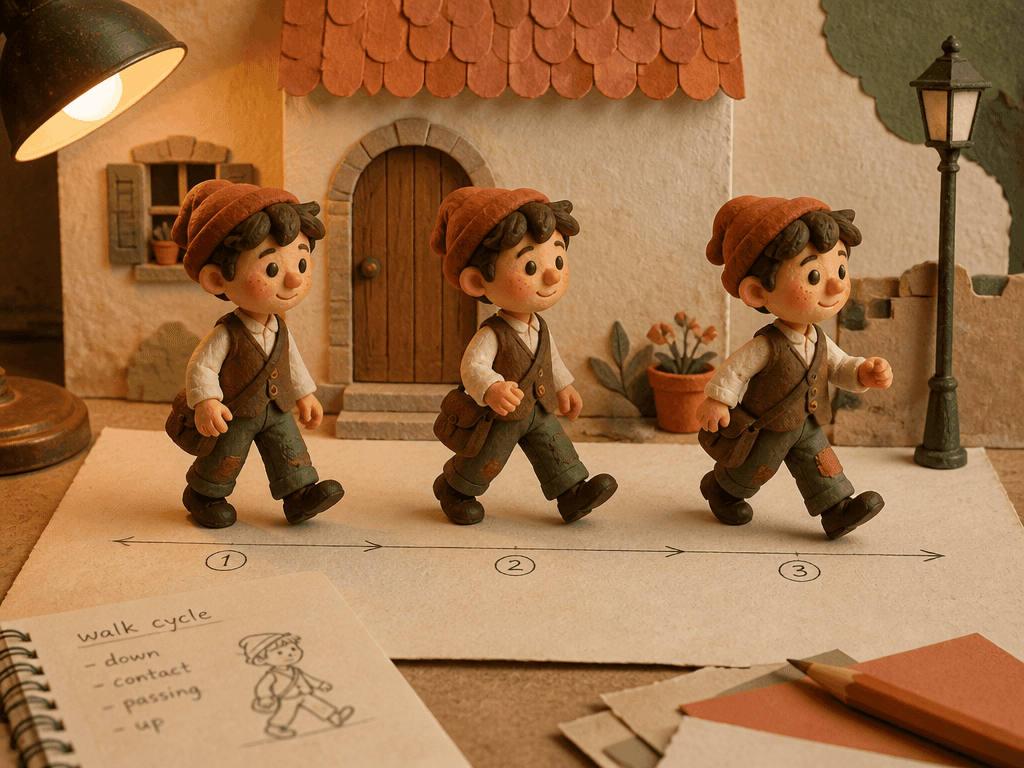
Shot 20 Dolly/Track low tracking shot. Movement: move at ground or below-waist height alongside the subject's movement path. Speed: match the subject, footsteps or wheels. Framing: keep the low detail readable while the ground plane moves through frame. End: finish with the low perspective clearly maintained.
Shot 19 Dolly/Track side tracking shot. Movement: move parallel beside the subject along their direction of travel. Speed: match the subject's motion. Framing: keep the subject in side profile or three-quarter profile at a stable distance. End: continue the parallel movement with clear horizontal motion.
Shot 17 Dolly/Track follow shot from behind. Movement: move behind the subject along their route at shoulder height. Speed: match the subject's pace. Framing: keep the back, shoulder or head as the foreground guide while the route ahead stays readable. End: continue following with the subject leading the frame.
Shot 12B Physical Moves slider left. Movement: slide the camera a small distance to the left. Speed: slow controlled constant motion. Framing: keep foreground, subject and background layers readable as parallax shifts. End: finish on a refined composition with the new left-side angle visible.
Shot 12 Physical Moves slider right. Movement: slide the camera a small distance to the right. Speed: slow controlled constant motion. Framing: keep foreground, subject and background layers readable as parallax shifts. End: finish on a refined composition with the new right-side angle visible.
Shot 09 Dolly/Track dolly out. Movement: move the camera physically backward in a straight line away from the main subject. Speed: smooth controlled retreat. Framing: keep lens direction and camera height consistent while more environment enters frame. End: finish in a wider composition.
Shot 08 Dolly/Track dolly in. Movement: move the camera physically forward in a straight line toward the main subject. Speed: smooth controlled push. Framing: keep camera height, lens direction and subject position consistent while distance closes. End: finish in a tighter composition.