Back View Prompts
Create evocative back-view images by controlling the silhouette, gaze direction, camera distance, lighting, and setting.
2026.08.03
Make “Back View Prompts” exactly the way you wantCreate your own “Back View Prompts”
Just ask in plain language — Carat generates optimized images and videos for you.

Start now with 100 free credits daily
뒷모습 인물 사진
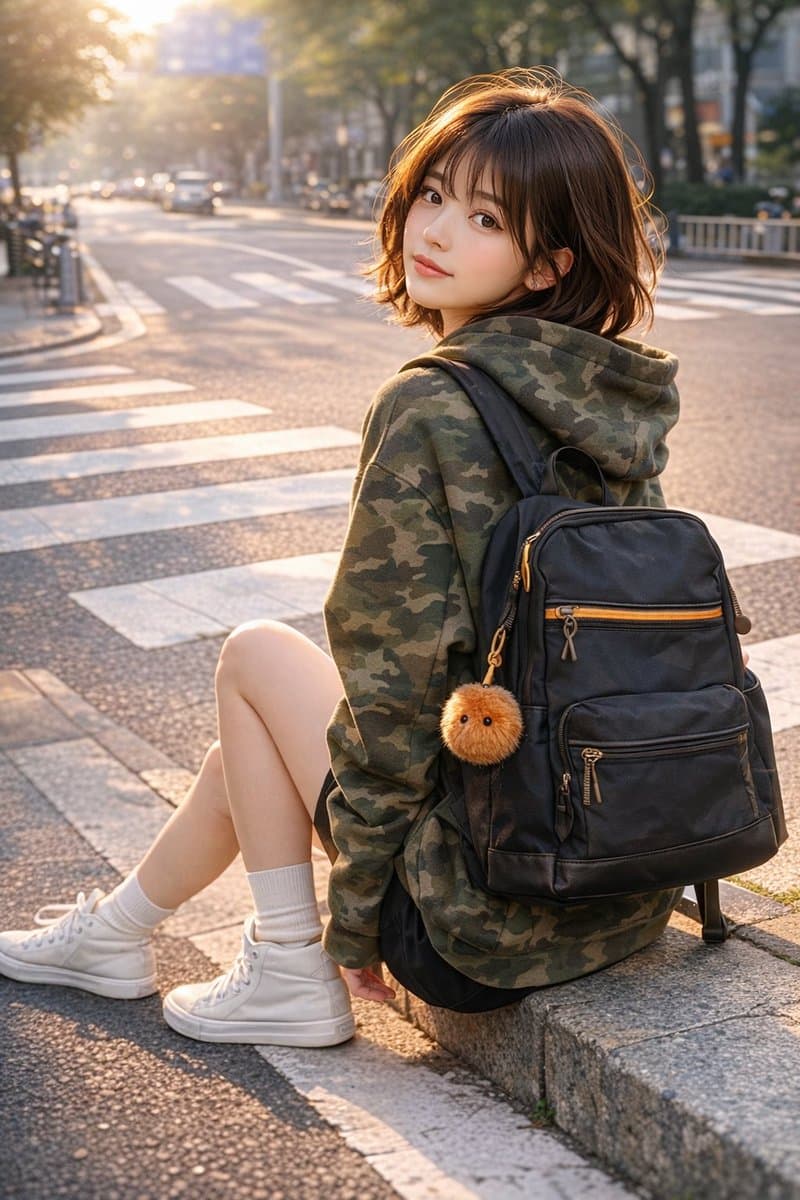
Medium Close-up Street Portrait of a Young Woman in Her Early 20s
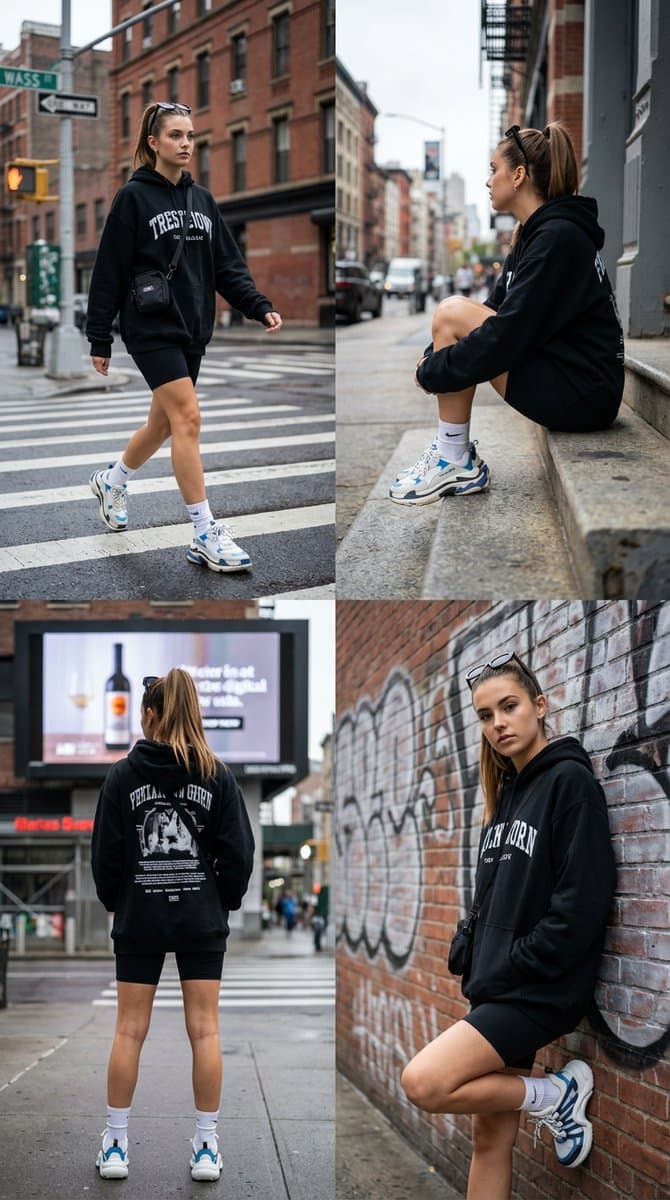
Streetwear Lifestyle Four Panel
What are back view prompts?
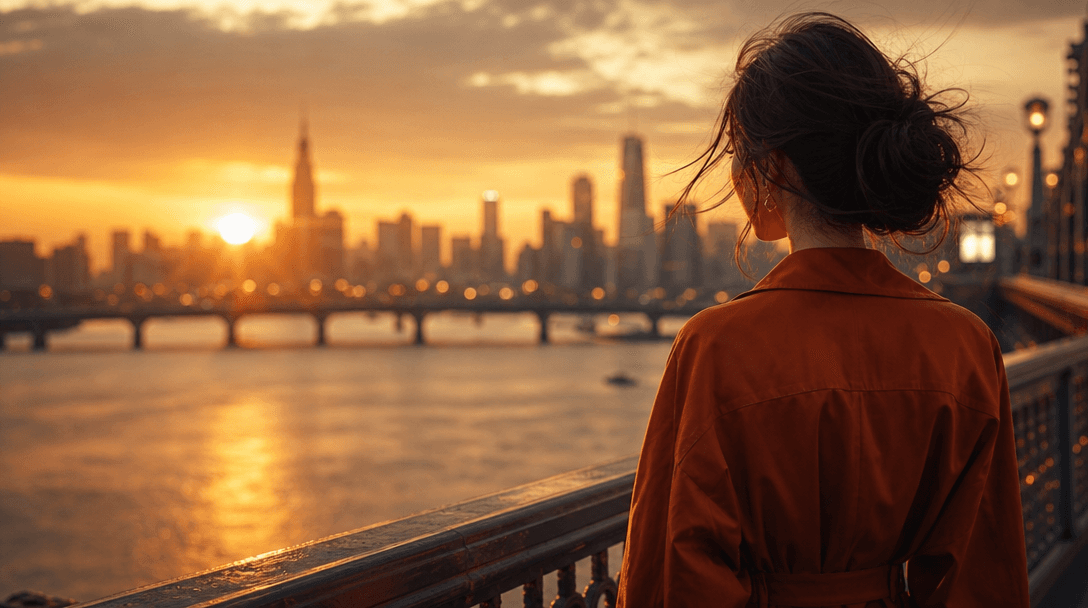
Back view prompts describe a scene through a person’s silhouette, hair, shoulders, posture, and surroundings instead of showing the face directly. A simple request for a person photographed from behind often leaves too many visual decisions to the image model. Add the camera height and distance, body direction, implied gaze, clothing texture, hair movement, and light direction for a more controlled result. Back views are useful when you want anonymity, a quiet emotional pause, or a frame that makes viewers imagine what happens next.
Choose the camera and composition
A waist-up medium shot shows the hair, shoulder line, and background together, while a full-body wide shot emphasizes the relationship between the subject and the location. Eye-level framing feels observational; a low angle gives the figure more presence. A 35mm lens impression keeps more of the environment visible, while an 85mm portrait lens impression compresses the background and concentrates attention on the silhouette. State whether you want a direct rear view or a three-quarter back view with a slight head turn.
Make the silhouette readable
Hair length and styling, the shape of a jacket or knit, and one or two props such as a bag or hat can identify the subject without a face. Wind moving the hair or coat creates direction in an otherwise still image. Avoid adding too many props because they can compete with the main outline. Keep a small set of identity details fixed across variations when the same character must recur.
Use light and setting to control the mood
A sunset backlight can create a warm rim around the figure, while overcast diffused light produces a calm documentary feeling. Name the setting precisely, such as a city alley, beach, hallway, or window-side room, and specify how sharply the background should appear. Contrast between the outline and the background helps the back view remain legible even in a small thumbnail.
A practical prompt structure
Write the subject, camera direction, pose, hair and clothing, lens and distance, light, setting, and aspect ratio in that order. For related ideas, see Male Side Profile Prompts and Profile Photo Pose Prompts.