Business Casual Style
Prompts for polished office looks that balance tailored structure with relaxed everyday comfort.
2026.08.28
Make “Business Casual Style” exactly the way you wantCreate your own “Business Casual Style”
Just ask in plain language — Carat generates optimized images and videos for you.

Start now with 100 free credits daily
Business Casual Style
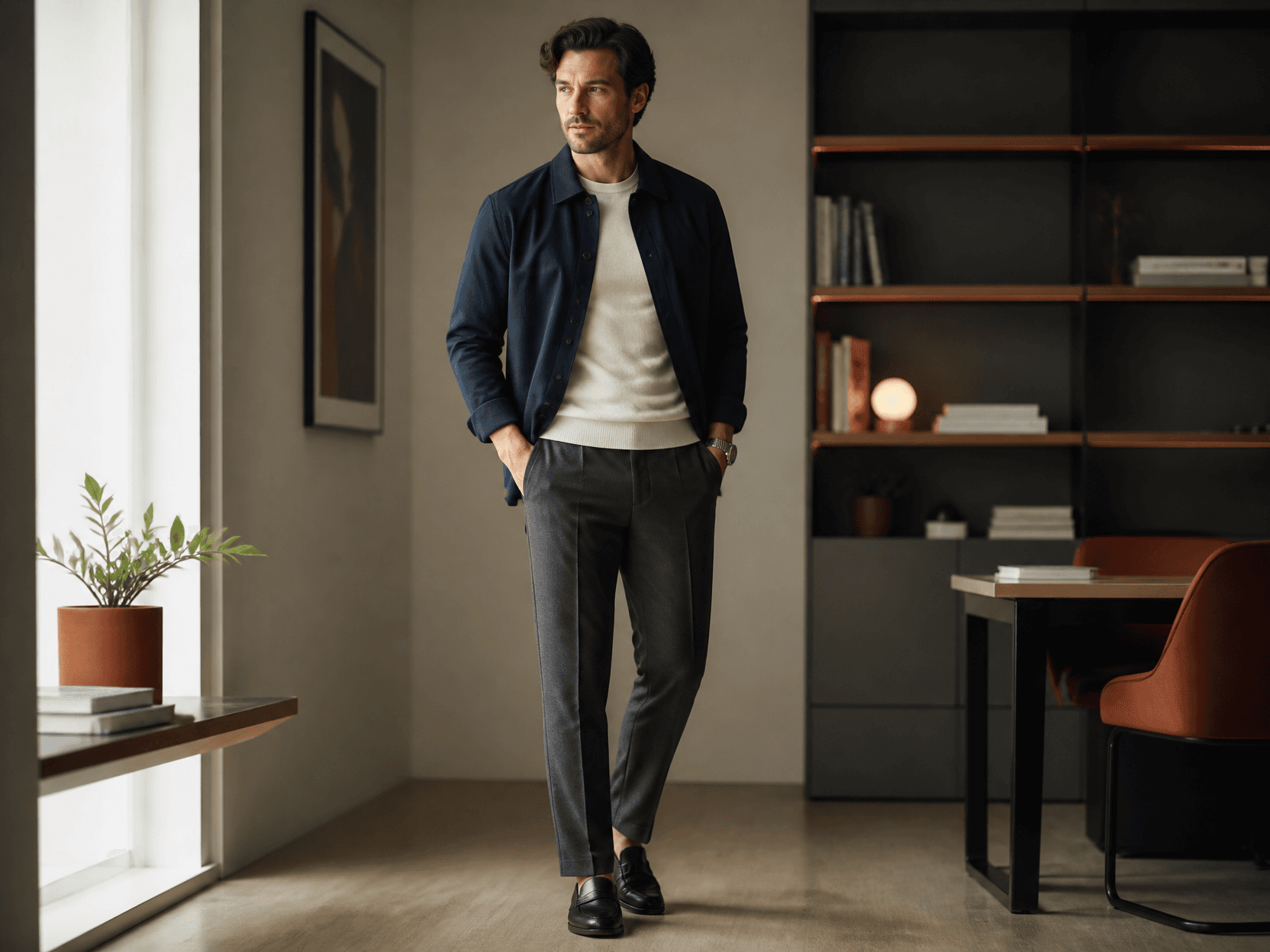
Business casual style prompts should communicate a balance: polished enough for a workplace, relaxed enough to avoid a formal suit impression. Describe the garments as separate layers, including a tailored blazer or overshirt, shirt or fine-gauge knit, straight trousers, loafers, clean sneakers, and practical accessories. A restrained palette of navy, ivory, charcoal, beige, or muted rust keeps the outfit coherent while allowing a small accent through a watch, bag, or eyewear. The environment and posture help define the use case. A professional standing beside a desk, walking toward a meeting room, or working at a cafe gives the clothing a believable narrative. Add soft window light, realistic fabric weave, natural folds, and ordinary office furniture to avoid an overly polished fashion fantasy. Choose a full-body or three-quarter composition when the silhouette matters, and use a waist-up frame for texture and accessories. The same prompt structure can be adapted for different seasons, occupations, ages of adult subjects, and editorial treatments. Excluding visible logos keeps the result flexible for mood boards, wardrobe references, and commercial concept development.
Frequently Asked Questions
It combines a neat, work-appropriate silhouette with relaxed fabrics and less formal pieces than a complete suit.
Navy, ivory, charcoal, beige, and muted accent colors are easy to combine.
Reduce the full suit structure and tie, then add knitwear, overshirts, loafers, or clean sneakers.
No, but a desk, meeting room, or cafe quickly communicates the intended setting.
Yes. Name seasonal materials such as linen, lightweight cotton, wool, or layered knitwear.
Prompt access follows the service policy; image generation may carry the selected model's cost.
Describing shape, color, and material instead of real logos creates a more reusable and neutral result.