Leopard Print Pattern
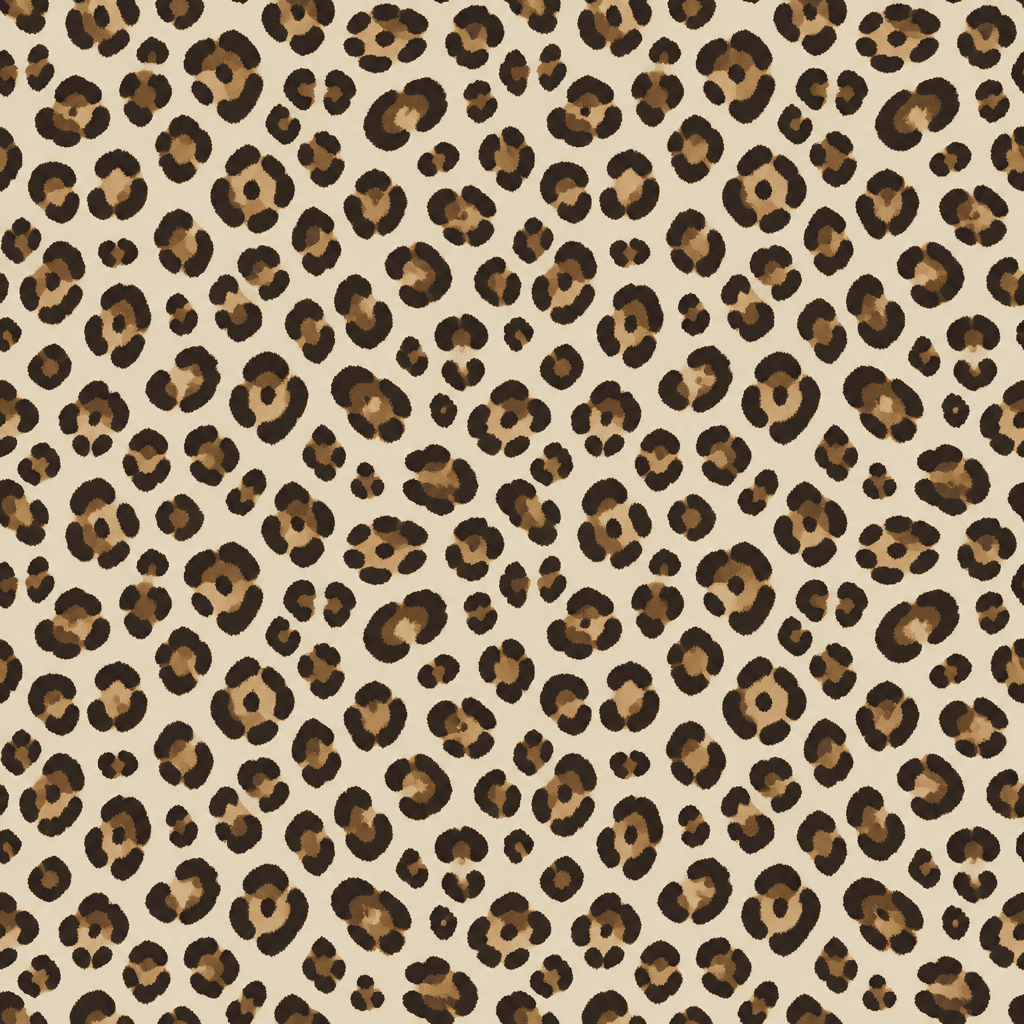
Create a warm, tileable leopard print pattern for fashion, packaging, and graphic design concepts.
2026.08.19
Make “Leopard Print Pattern” exactly the way you wantCreate your own “Leopard Print Pattern”
Just ask in plain language — Carat generates optimized images and videos for you.

Start now with 100 free credits daily
호피무늬 패턴
What are leopard print pattern prompts?
Leopard print pattern prompts design a repeatable textile-like surface for apparel, packaging, backgrounds, stickers, and fashion mood boards. Irregular rosettes and a restrained palette of ochre, caramel, espresso brown, and soft black preserve the rhythm of animal print while keeping the result practical for design work. The key instruction is a seamless repeat with edges that connect naturally when the tile is duplicated.
Controlling scale and density
Larger rosettes read better in thumbnails and packaging previews. Medium marks work well on apparel mockups, while a broad background can use varied scale and orientation to reduce obvious repetition. A muted cream ground keeps the brown marks visible without making the surface too heavy. Use black as an accent instead of covering every outline.
Practical uses
Apply the pattern to a fashion lookbook backdrop, nail-art concept, poster panel, gift wrap, diary cover, or product packaging study. Requesting only the tile, without a garment or model, makes it easier to place the surface into other layouts. The same structure can be recolored for a playful, monochrome, or seasonal direction.
Prompt controls
Include seamless repeat, tileable edges, and flat overhead presentation. Name the material if you want textile grain, paper fibers, or a clean digital surface. If the spots look too regular, add natural irregular rosettes. If the palette becomes loud, limit the color count and specify a muted ground.
Reviewing the result
Test the four edges by duplicating the tile in a grid and look for visible seams or gaps. Ask for even distribution when rosettes cluster in one area. For production printing, verify resolution, color profile, and licensing requirements separately in the design application.