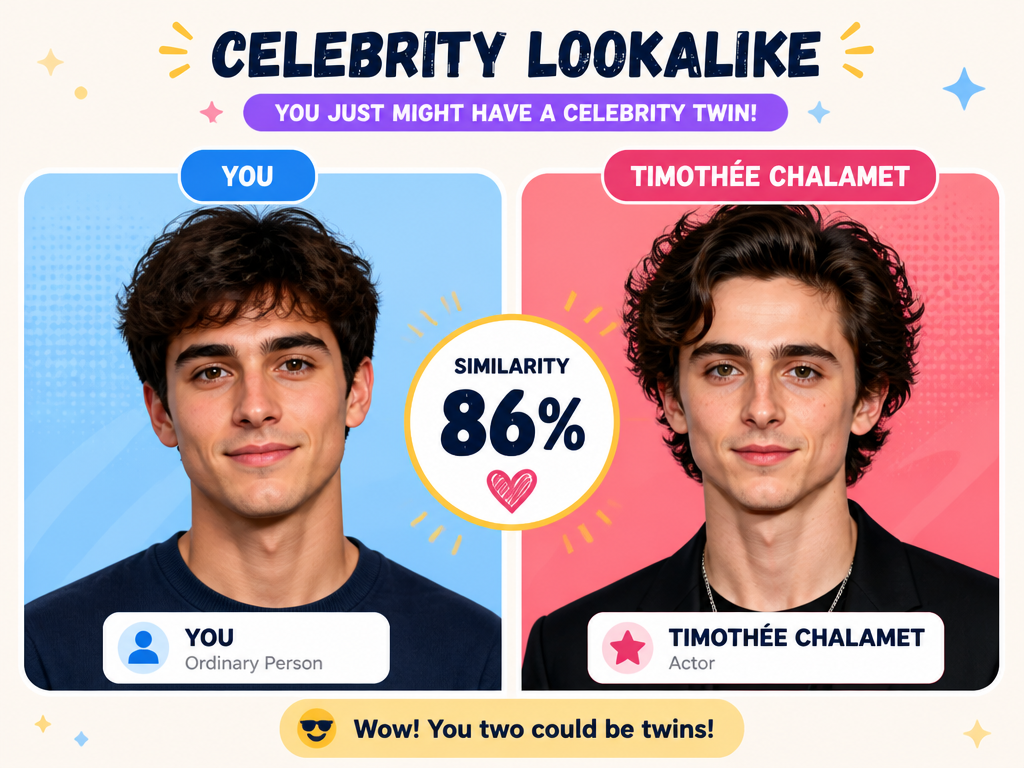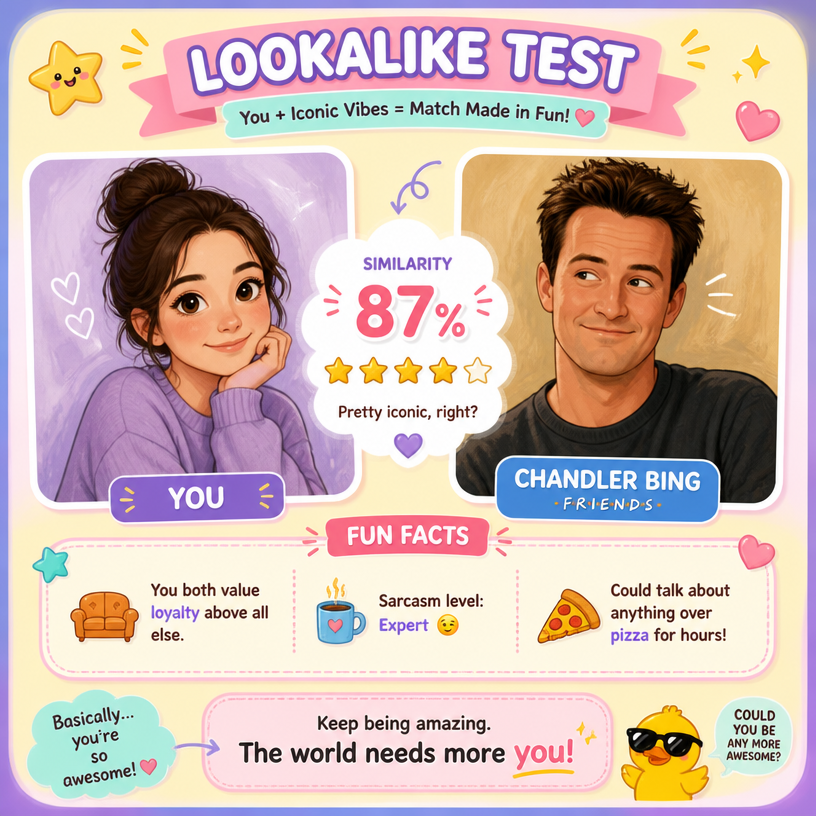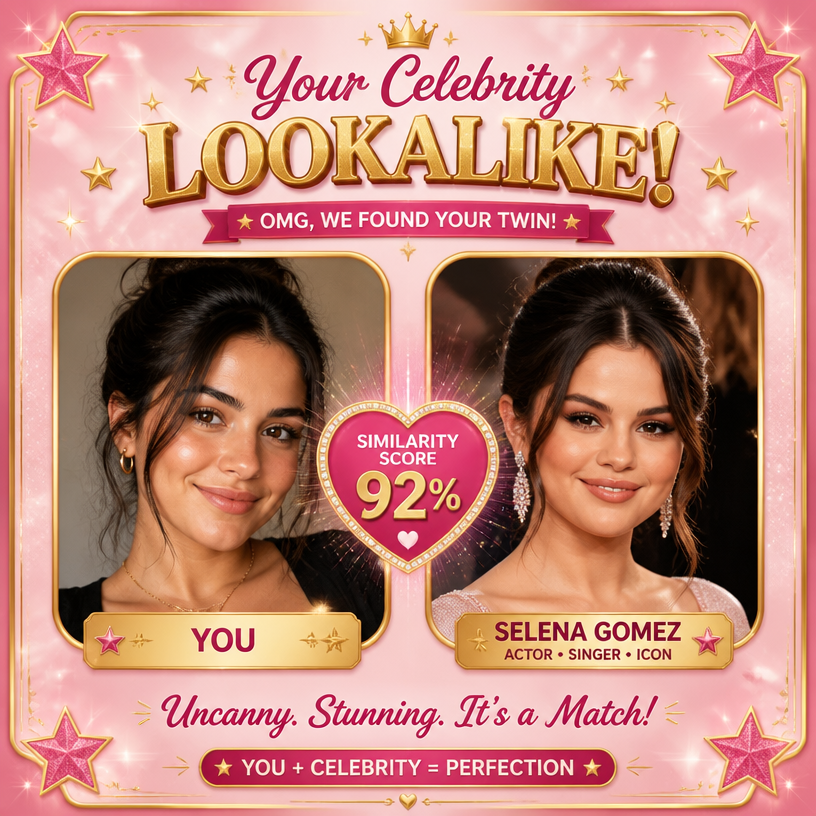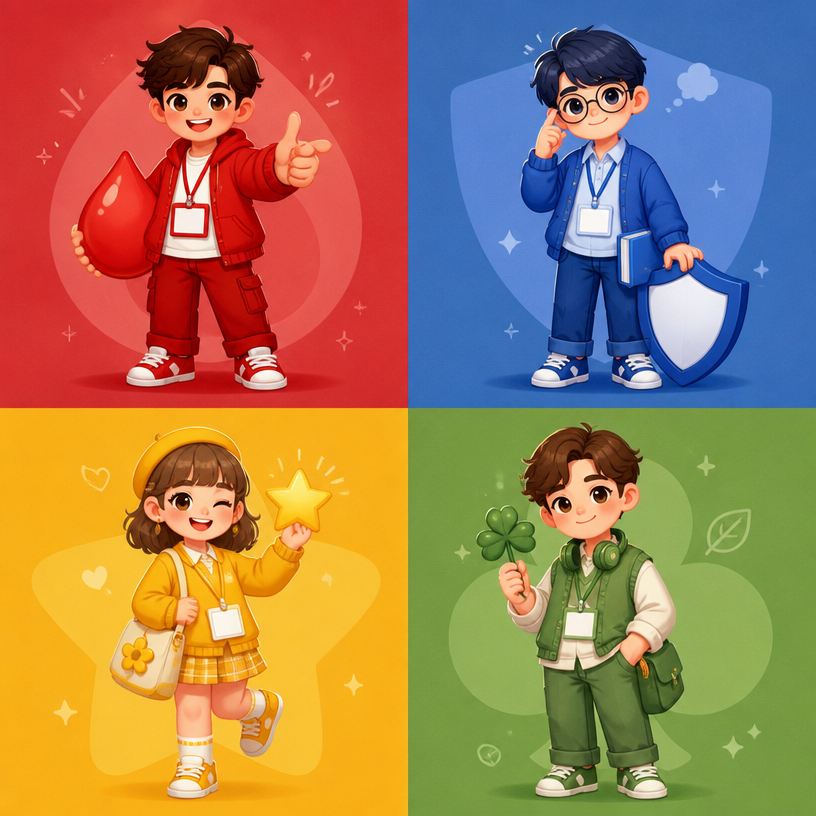
Lookalike Photo
Create stunning celebrity lookalike images and character matching content with these professional AI prompts.
2026.07.04
Mach „Lookalike Photo“ genau so, wie du es willstErstell dein eigenes „Lookalike Photo“
Sag es einfach in deinen Worten – Carat generiert passende Bilder und Videos für dich.

Starte jetzt mit 100 kostenlosen Credits pro Tag
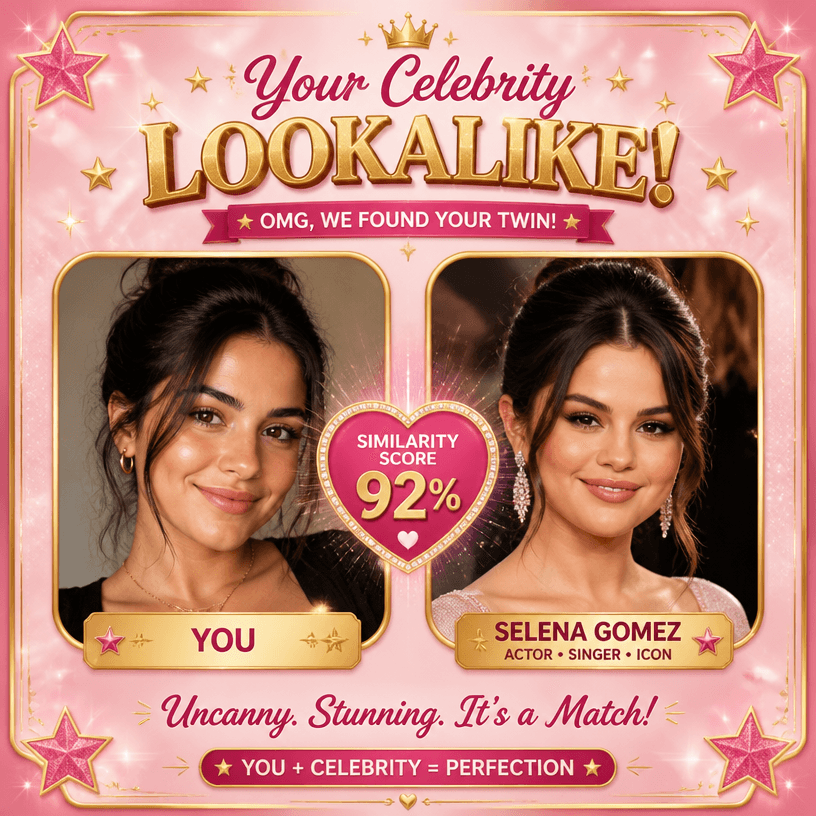
나와 닮은 스타 카드
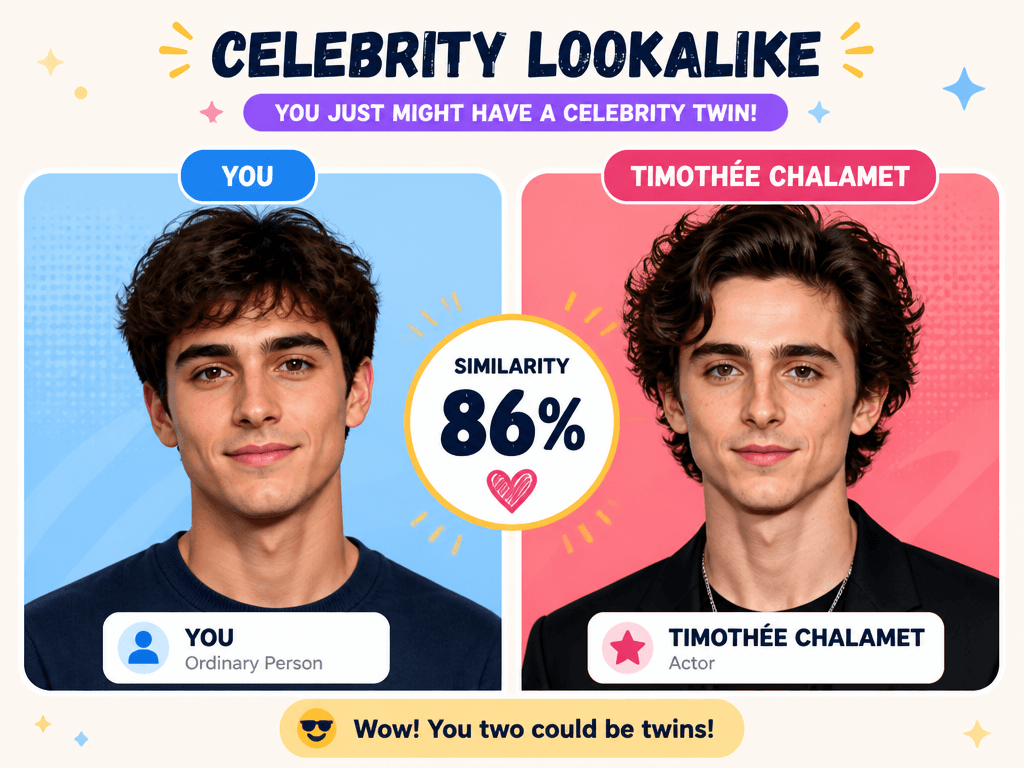
닮은꼴 연예인 일러스트
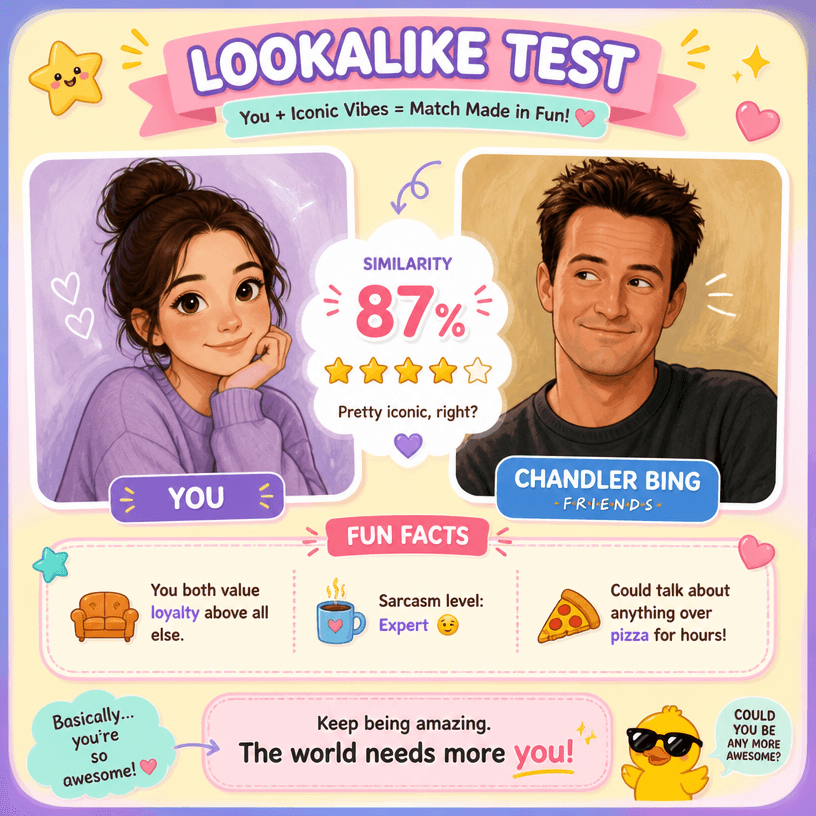
닮은꼴 테스트 결과
What Are Lookalike Photo AI Prompts?
Lookalike Photo AI prompts are specialized sets of instructions designed to generate images that capture the likeness or aesthetic essence of specific individuals or celebrities. By utilizing advanced machine learning models, these prompts allow creators to produce high-quality visual content such as celebrity lookalike test result cards, star-inspired illustrations, or personality-based character matching assets. The primary focus of these prompts is to translate human features and "vibes" into digital art with precision. Whether you are aiming for a photorealistic portrait that mirrors a famous actor or a stylized anime version of a well-known singer, these prompts provide the linguistic framework to achieve those specific visual goals. They bridge the gap between abstract imagination and concrete visual representation, enabling anyone to create sophisticated imagery without professional art skills.
Best Use Cases
The applications for Lookalike Photo prompts are vast and particularly popular in the digital content creation sphere. One of the most common uses is for social media engagement, such as creating visually stunning results for "Which Celebrity Do I Look Like?" quizzes. Creators can generate artistic interpretations of lookalike results to share on platforms like Instagram, TikTok, or Twitter. Additionally, these prompts are excellent for developing fan art that combines realistic facial features with fantastical settings, such as placing a star's lookalike in a futuristic cyberpunk world. Marketers also find these useful for creating relatable persona avatars in ad campaigns where a specific "type" of face is needed to resonate with a target audience. In the realm of storytelling, authors can use these prompts to visualize their characters based on real-world inspirations, ensuring consistency across their narrative universe.
Why This Tag Works
The Lookalike Photo tag is effective because it targets the specific human desire for recognition and resemblance. Technically, it leverages the model's ability to recognize and replicate distinct facial structures, expressions, and stylistic signatures associated with popular figures. Instead of generic descriptions, this tag encourages the use of refined descriptors that refine the output toward a specific "look" while maintaining artistic originality. It provides a structured way to experiment with different art styles-ranging from oil paintings to modern digital vector art-while keeping the core identity of the subject intact. For professionals, it serves as a rapid prototyping tool for character design, and for casual users, it offers an accessible way to play with their identity and how they might appear in different artistic dimensions.
Explore Related Prompts
To further enhance your creative projects, check out these related categories:
- Character Profile Photo : Design detailed profile shots for your lookalike characters.
- Profile Photo : Master the art of high-quality human portraiture.
- Illustration : Transform your lookalike ideas into beautiful artistic pieces.
- Card News Template : Create perfect layouts to share your lookalike results.
- Character Illustration : Focus on building unique and consistent character designs.
- Cinematic Video : Bring your lookalike characters to life in a movie-like setting.
- Ad Video : Explore how to use these visuals in professional commercial content.
Prompt Building Tips
When constructing a prompt for a lookalike photo, precision is your best friend. Start with the "anchor" features of the person you have in mind-mention specific eye shapes, hair textures, or distinctive facial marks. Use phrases like "almond-shaped eyes," "wavy obsidian hair," or "sharp jawline" to guide the AI. To capture a specific celebrity's aura without naming them directly (to ensure more creative variety), use descriptive adjectives like "sophisticated Hollywood elegance" or "urban streetwear idol aesthetic." Lighting plays a crucial role; specify "golden hour lighting" for a warm, approachable look or "dramatic rim light" for a mysterious vibe. Always include technical keywords like "8k resolution," "hyper-realistic textures," and "masterpiece" to ensure the final output is of the highest professional quality. Experimenting with camera angles, such as "close-up portrait" or "three-quarter view," can also significantly change the impact of the final lookalike image.