Hanbok Illustration
AI prompts for creating beautiful hanbok illustrations in various artistic styles.
2026.07.03
Make “Hanbok Illustration” exactly the way you wantCreate your own “Hanbok Illustration”
Just ask in plain language — Carat generates optimized images and videos for you.

Start now with 100 free credits daily
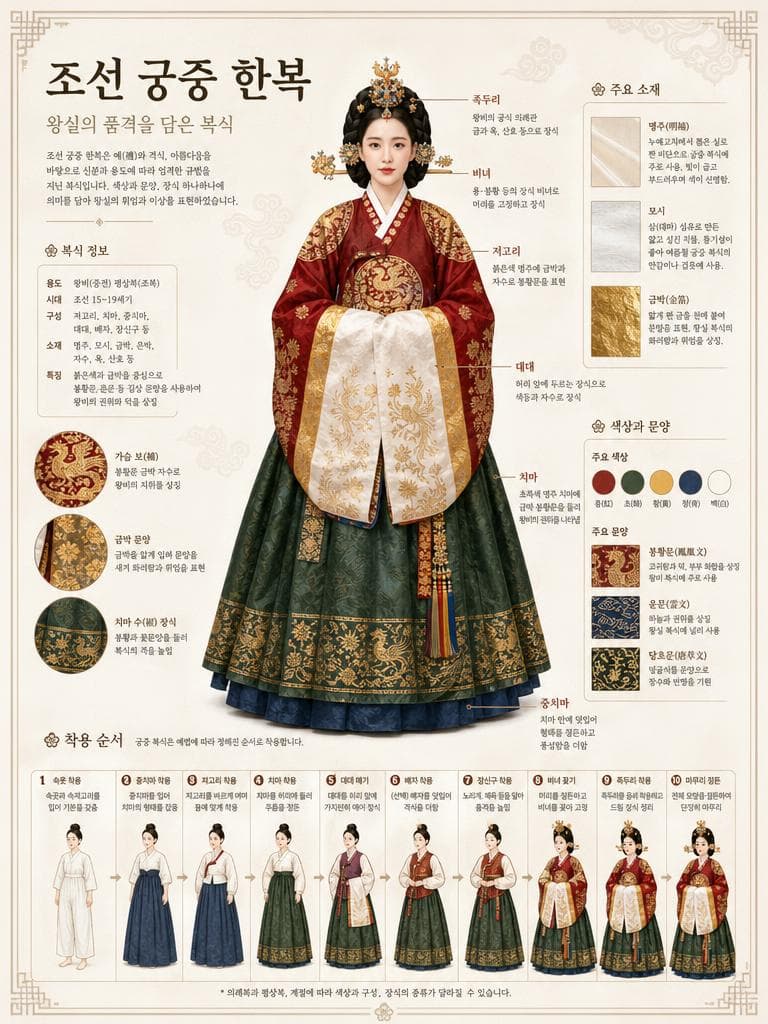
Museum Atlas-style Korean Detailed Infographic About Joseon Court Dress ( )
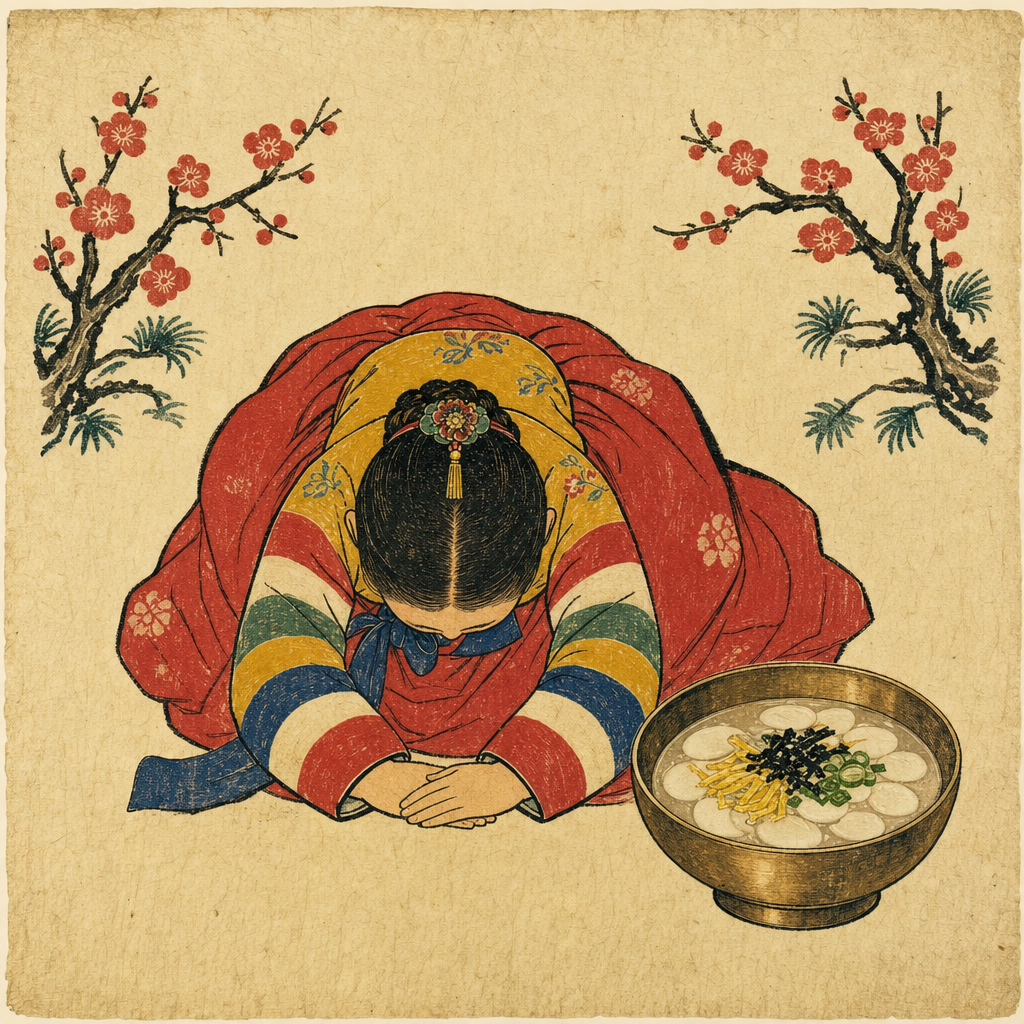
설날 한복 새해 인사 카드
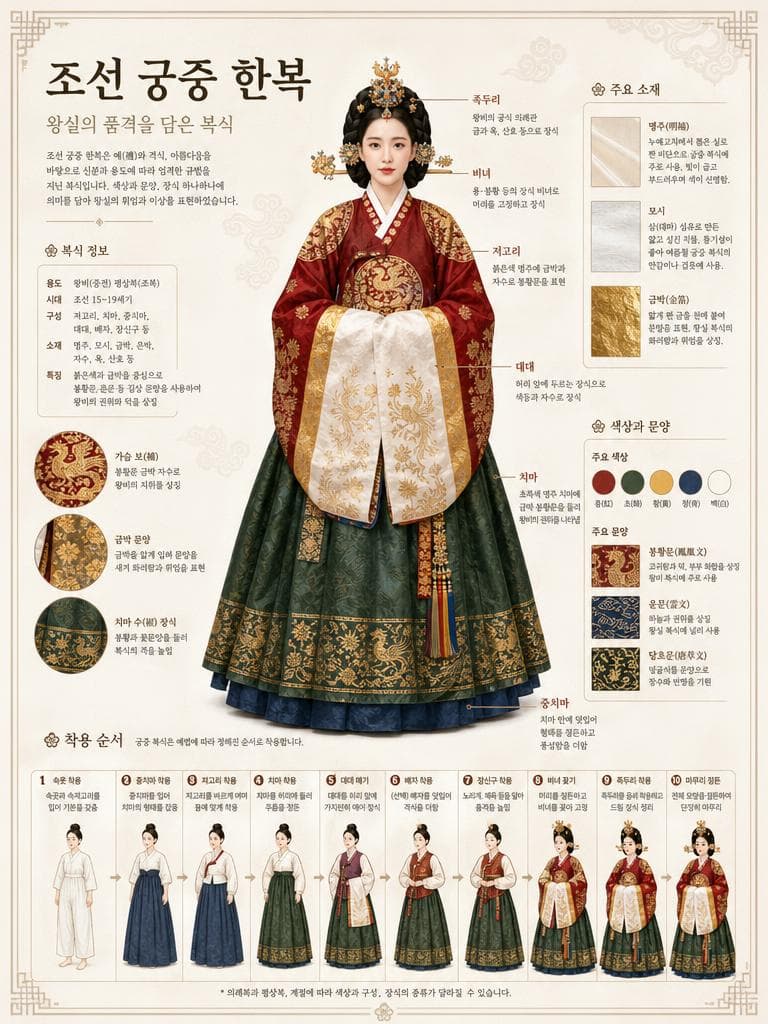
Museum-Style Hanbok Analysis Infographic
What Are Hanbok Illustration AI Prompts?
Hanbok Illustration AI prompts are generative instructions designed to create artwork featuring hanbok, the traditional Korean garment known for its elegant lines, vibrant colors, and graceful silhouette. These prompts can render hanbok in a wide range of artistic styles, from delicate watercolor paintings that capture the flowing movement of the skirt to detailed digital character illustrations suited for webtoons and merchandise design. Carat's AI has been trained on diverse visual data including traditional Korean folk paintings (minhwa), modern character designs, and fashion illustrations, enabling it to understand the structural components of hanbok such as the jeogori (jacket), chima (wrap skirt), durumagi (overcoat), and the distinctive goreum (ribbon tie). The result is artwork that respects the cultural significance of the garment while allowing for creative and contemporary interpretations.
Main Use Cases
- Creating seasonal content for Korean holidays like Chuseok and Seollal with traditional hanbok imagery for social media, blogs, and newsletters.
- Producing educational illustrations for Korean culture courses, language textbooks, or museum exhibits explaining traditional clothing.
- Developing branding and decorative artwork for Korean restaurants, cultural centers, or tourism campaigns that celebrate heritage.
- Designing character illustrations for webtoons, mobile games, or merchandise featuring characters dressed in hanbok for a fusion of traditional and modern aesthetics.
- Creating K-culture content for international audiences, including promotional materials for Korean cultural events, K-drama fan art, or Hallyu merchandise.
Why This Tag Is Useful
Hanbok is one of the most visually distinctive traditional garments in the world, characterized by its high waistline, full skirt, structured jacket, and rich color symbolism. However, accurately illustrating hanbok requires understanding its unique construction and cultural context, which general AI models often struggle with. This tag is useful because Carat's AI has specific knowledge of hanbok's structural elements and can render them correctly across different artistic styles. For Korean content creators, this provides a reliable tool for producing culturally appropriate imagery at scale. For international creators interested in Korean culture, it offers an accessible way to incorporate authentic hanbok imagery into their work without risking cultural misrepresentation. The ability to blend traditional hanbok with modern illustration styles also opens up creative possibilities for fusion designs that appeal to contemporary audiences.
Related Prompts
- Sketch Illustration
- Girl Illustration
- Girl Character
- Squirrel Illustration
- Fox Illustration
- Character Profile Photo
Prompt Composition Tips
- Specify the type of hanbok and occasion: Hanbok varies significantly by purpose and formality. 'Ceremonial wedding hanbok with elaborate wonsam overcoat and gold thread embroidery', 'everyday casual hanbok in muted earth tones', 'child's doljanchi first birthday hanbok with bright saekdong stripes', or 'royal court hanbok from the Joseon dynasty with intricate Accessories' each create distinctly different illustrations. The occasion determines the color palette, level of decoration, and garment components.
- Define the color scheme: Hanbok color carries deep cultural meaning. Use terms like 'traditional obangsaek five-directional colors: red, blue, yellow, white, black', 'soft pastel pink and mint green for a spring celebration', 'rich burgundy and gold for formal ceremony', or 'monochrome white hanbok for mourning or purity'. These color instructions help the AI create culturally appropriate and visually harmonious illustrations.
- Choose the illustration style: The artistic medium dramatically affects the mood. 'Delicate watercolor with soft washes and visible brush texture', 'clean flat vector character design for webtoon', 'traditional minhwa folk painting style with bold outlines and flat colors', 'detailed digital painting with realistic fabric rendering', or 'cute chibi style for sticker design' each produce very different results suited to different applications.
- Describe the character and setting: Context brings the illustration to life. 'Young woman standing gracefully with hands clasped in front, hair in traditional braid with ornamental daenggi ribbon', 'elderly man seated on wooden maru floor with folding screen painted with plum blossoms behind him', or 'group of children playing traditional games in a hanok courtyard, all wearing colorful holiday hanbok'. These scene descriptions help the AI create compositions that feel authentic and narratively rich.
By combining cultural knowledge with artistic direction, you can create hanbok illustrations that honor tradition while expressing your unique creative vision.