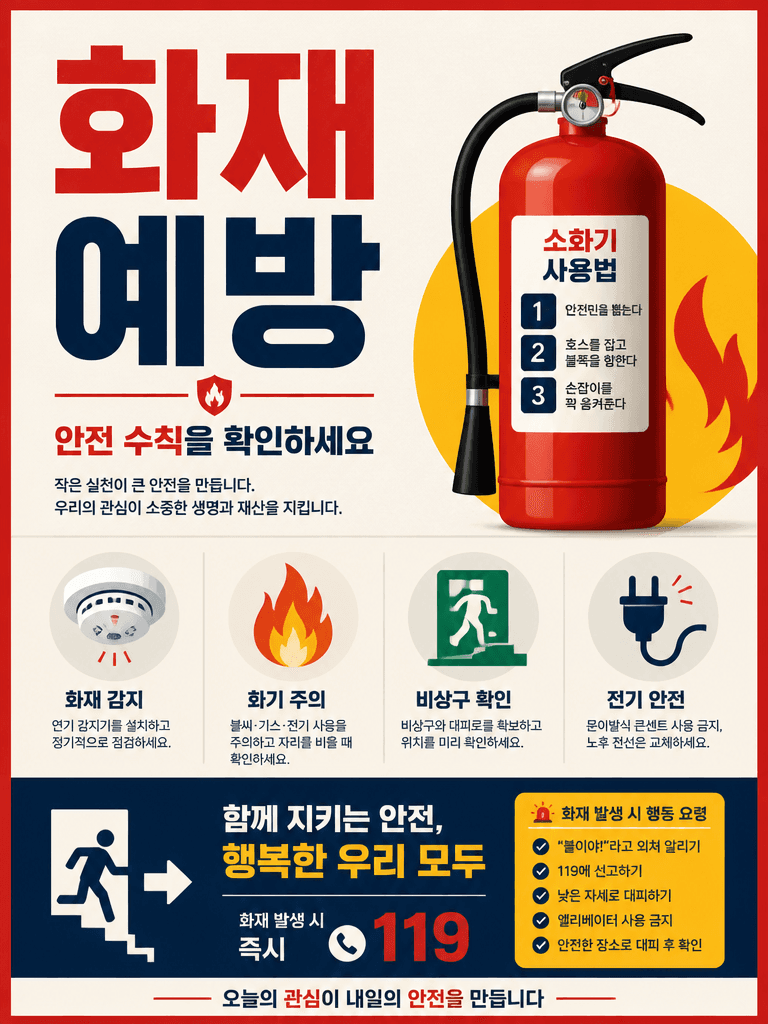
Create clear fire prevention posters for schools, workplaces, homes, and public facilities with AI prompts structured around practical safety actions.
2026.07.16


A fire prevention poster AI prompt is a structured instruction for turning critical safety guidance into a clear educational visual. It can organize extinguisher use, smoke alarm checks, electrical precautions, evacuation routes, and emergency actions without overwhelming the viewer. Begin by defining the location and audience because a home, school, kitchen, warehouse, and office face different hazards. Divide the poster into a headline, warning signs, prevention actions, and emergency response. The most effective result encourages a specific behavior rather than using dramatic flames only to create fear.
For homes, include smoke detectors, overloaded outlet prevention, cooking supervision, and extinguisher placement. A school poster may show students lining up, staying low under smoke, and following marked exits. Workplace materials can add hot-work permits, combustible storage, and unobstructed corridors. Reserve red for warnings and prohibited actions, then separate recommended actions with blue or green panels. Numbered diagrams and arrows help when sequence matters, such as pulling an extinguisher pin before aiming at the base of a fire.
Preschool designs should rely on large symbols and one action per sentence. Adult workplace posters can include inspection checklists, responsible departments, and local contact areas. Mention the installation point, such as a corridor, dormitory, elevator lobby, or commercial kitchen, so scale and viewing distance are appropriate. In multilingual facilities, combine concise translations with widely recognized safety pictograms. Seasonal versions can focus on heaters, wildfire risk, holiday cooking, or temporary event equipment while retaining the same visual system.
AI-generated safety content is not a substitute for official fire codes or facility procedures. Verify extinguisher steps, emergency numbers, exit directions, terminology, and accessibility requirements with the responsible authority. Never publish distorted text or ambiguous icons. Print a test at the actual display size and confirm that secondary instructions remain readable from the expected distance. Ensure decorative flames do not cover exit symbols or numbered actions. The final poster should match the building layout and support drills, staff training, and posted emergency plans.