Skip to main content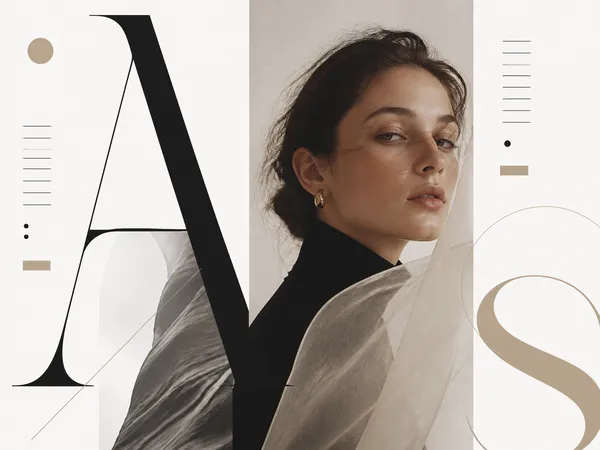

Kinetic type self-portrait
Claude Opus 5.5· Video
Before sending, switch the agent model to Claude Opus 5.5. On desktop, use the button on the right of the input box. On mobile, tap the model name at the top of the screen.
make a dynamic 10-second motion graphics video that shows who are you as Opus 5.5 - be as creative and dynamic as possible. Avoid the frames and texts on the corners which are typical ai made giveaways!
Related Prompts
Kinetic type showreel · @itsuki_dev
Claude Opus 5.5· Video
make a dynamic 15-second motion graphics video that shows what an incredible motion designer you are, like it's your showreel for a résumé. go all out.
Bold typographic motion showreel
Claude Opus 5.5· Video
Make a dynamic 15-second motion graphics video that shows what an incredible motion designer you are, like it's your showreel for a resume. Go all out.
Kinetic type motion showreel
Claude Opus 5.5· Video
あなたがどれほど素晴らしいモーションデザイナーかを示す、ダイナミックな15秒のモーショングラフィックスビデオを作成してください。履歴書用のショーリールのような感じで、全力でやって。
Speech built as architecture
Claude Opus 5.5· Video
Create a 20.00-second kinetic spoken-word film titled “BUILD THE FLOOR.” Treat this as an original miniature speech staged entirely through typography. Every line changes the architecture of the frame. The final declaration must stand on something the earlier words physically constructed. Deliver one self-contained HTML file, 1080×1080, targeting 60fps, using SVG and/or Canvas. Embed all required assets. ART DIRECTION Background #102820. Paper # F4E9D5. Structural accent # F2B544. A literary editorial world with the scale and confidence of a public monument. Use a high-contrast serif for the speech, a heavy grotesque for load-bearing words, and a restrained monospace for small timing marks. No distressed protest-poster clichés, megaphones, flags, crowds, microphones, or stock footage. ORIGINAL SPEECH — EXACT WORDS, EXACT ORDER “We were told to wait.” “So we learned the weight of waiting.” “Then one voice made room.” “Then another.” “Now the floor belongs to us.” Do not attribute these words to any real person. No extra slogans. The complete speech must be understandable without audio. CENTRAL VISUAL RULE Words have assigned architectural roles. WAIT is a lintel. WAITING is a suspended load. VOICE is a support. ROOM is an opening. FLOOR is a platform. These roles must emerge from the actual letterforms, not from separate illustrations placed behind text. STORYBOARD 0.00–3.00 “We were told to wait.” The sentence occupies a narrow horizontal opening beneath a massive WAIT. The opening slowly compresses while the sentence remains readable. The pressure comes from the layout, not camera shake. 3.00–6.50 “So we learned the weight of waiting.” Reveal the sentence in spoken phrase groups. WAITING lowers on two fine vertical rules. Those rules become suspension cables. A baseline bends under the visual load using a controlled vector deformation. 6.50–10.00 “Then one voice made room.” VOICE enters vertically and rotates into a structural support. It lifts one end of the baseline. The counter of the O in ROOM becomes an aperture. The next composition is revealed through that aperture. 10.00–12.50 “Then another.” A second support arrives. The tilted structure levels. This is the first moment of perfect horizontal alignment in the film. Use a brief stillness to make the change feel earned. 12.50–16.00 “Now the floor belongs to us.” Earlier structural words assemble into a platform. The final sentence settles onto it. US receives emphasis through shared alignment and scale, never through a separate flashy effect. 16.00–18.00 Hold the complete declaration. A slight release of tension travels through the supporting rules. No new text. No restless decorative motion. 18.00–20.00 The camera tracks beneath the completed platform. Its underside fills the frame and becomes the opening WAIT lintel. Under full occlusion, return hidden elements to their initial positions. Reveal the exact opening composition. CHOREOGRAPHY Do not force the speech onto a dance beat. Use a cue sheet based on phrases, pauses, and emphasis. Phrase reveals should follow reading order. Allow at least one 400ms moment of absolute stillness. Use critically damped motion for settling loads. Use controlled elastic deformation for the baseline only. Make the changes in available space carry the emotional progression. TYPE IMPLEMENTATION Use actual glyph paths for structural words. Preserve counters and legibility during deformation. For transitions between unrelated words, use occlusion or matched structural edges; do not interpolate arbitrary path points. Keep the currently spoken phrase readable before it becomes architecture. ENGINEERING Implement window. seek(t) as a deterministic scene renderer. No accumulated physics, autonomous CSS transitions, or changing random values. Use time-remapping curves and analytic transforms. Use a 20-second periodic timeline with render(0)=render(20). Provide fixed-step access at n/60 for 1200 export frames. Audio is optional and off by default; no browser speech synthesis or autoplay dependency. QUALITY GATE Inspect eight representative frames. Check that the speech reads in the correct order. Check that structural transformations never destroy a line before the audience can read it. Check the final platform is visibly assembled from earlier elements. Return the complete HTML implementation.
Kinetic type showreel · @zheke
Claude Opus 5.5· Video
Hello Opus 5.5 show me what an incredible motion designer you are.
Synced lyrics motion video
Claude Opus 5.5· Video
make a dynamic lyrics motion graphics video based on the attached music, perfectly syncing the lyrics and animation to the vocals and beat. make it feel like an incredible motion designer’s showreel for a résumé. go all out.
Talking-head clip edit
Claude Opus 5.5· Video
Cut a raw talking-head clip into a punchy, fun edit with subtitles, graphics and music
Motion techniques showreel
Claude Opus 5.5· Video
Create a bold, dynamic 15-second motion graphics showreel that feels like the ultimate portfolio piece of an exceptionally talented motion designer. Showcase a wide range of advanced techniques: kinetic typography, smooth transitions, 2D and 3D animation, abstract geometry, fluid simulations, particles, distortion, creative masking, compositing, lighting, depth, and seamless camera movement. Keep the pacing fast, confident, and visually surprising, with every shot transitioning naturally into the next. Make it feel meticulously art-directed rather than like a random collection of effects. Push the creativity, polish, timing, and visual impact as far as possible. This should feel like the opening reel that gets a motion designer hired.
Typography Design Example 3
GPT Image 2· Image
Elegant editorial typography layout, serif and sans serif letter shapes, generous white space, premium magazine cover style, no readable words.
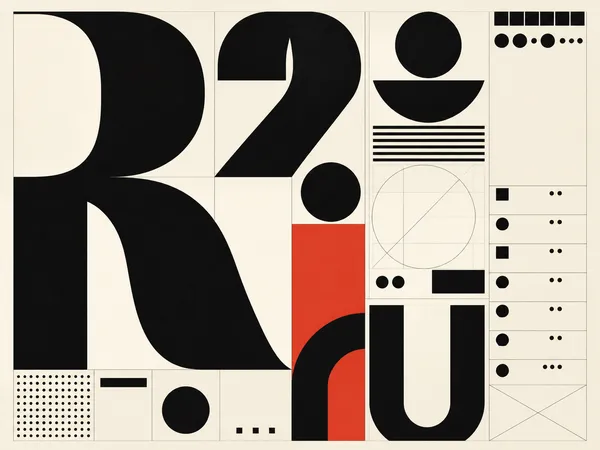
Typography Design Example 1
GPT Image 2· Image
Experimental typography design poster, large abstract letterforms, black and cream palette with one red accent, Swiss grid layout, placeholder glyphs only, no readable words.
Retro Anime Crime Title Sequence
MiniMax H3· Video
Create a 15-second, 16:9 opening-title sequence for a stylish crime mystery. Draw from retro Japanese animation titles, hard-edged silhouettes, comic-book collage, asymmetric split screens, bold geometric color fields, English credit typography, sparse katakana accents, and a noir-jazz sensibility. Aim for 60% suspense and 40% jazz: mysterious, cool, agile, and urban—never horror, heavy drama, or a cheerful jazz music video.
Build the sequence as motion-graphics collage: linework appears over black, split-screen boundaries snap into place, then color blocks and frames assemble piece by piece. Character silhouettes, prop close-ups, and English credits slide, pop, and reveal through masks on the beat. Keep it designed and graphic, not like conventional narrative animation.
Credits must be clean and legible. Animate thin frames drawing on, names sliding in, letters appearing one at a time, or color blocks revealing type, then hold briefly. Do not introduce Chinese text, garbled characters, or misspellings. Each role and each name appears once only; do not assign multiple roles to the same name.
Vary the transitions: circular vinyl-record wipes, vertical car-door cuts, long character shadows wiping frame, red-line slices, oversized letter masks, split-screen reconfigurations, hard color-block cuts, and tiled frames snapping into place. Keep every transition crisp, rhythmic, suspenseful, and collage-driven. No soft dissolves or fluid morphs.
BGM: an original 15-second title cue, 60% suspense and 40% jazz. Use a low drone, tense string pizzicato, cool synth pulses, low kick, sparse brushwork, fragments of walking bass, short baritone-sax phrases, and clipped brass accents. Build suspense with low frequencies and hi-hat in the first 2 seconds; bring in the low beat at 3 seconds, jazz-bass movement at 6 seconds, and a short sax/brass riff at 10 seconds. Freeze the final 2 seconds on a tense chord and drum hit. Keep it mysterious and criminally cool, never upbeat, and do not imitate an existing melody.
Paper-style product launch film
Claude Opus 5.5· Video
Create a 15s motion-graphics film explaining {{PRODUCT}}. HyperFrames + GSAP, no voiceover, no footage.
Style: paper-light canvas, marker notes that draw on, real physics, huge kinetic type,
hard light/dark switches, a new idea every 1.5–2 s, a sound on every hit.
COPY: read {{POSITIONING_DOCS}} first. {{ONE_LINER}} For {{AUDIENCE}}. {{WHAT_IT_DOES}}
Name what the product learns, never the abstraction.
RULES
- No chrome (scrubber, timecode, fps, headers). No animator jargon on screen
("squash", "stagger", "easing"...). Every word speaks to the buyer.
- No invented results: no %, multipliers, customer names or figures.
- Never use: {{BANNED_WORDS}}.
- Logo: real mark {{LOGO_FILE}} + "{{PRODUCT}}" in {{WORDMARK_FONT}}; never a boxed logo file.
CRAFT
- Colours {{COLOR_CANVAS}} / {{COLOR_INK}} / {{COLOR_ACCENT_1}} / {{COLOR_ACCENT_2}}; notes in the
accents; dark mode = charcoal matching the palette.
- Fonts {{BRAND_FONTS}}; Anton for kinetic type; Caveat handwriting via stroke-dashoffset.
- Real easing, squash/stretch, stagger, overlap, onion skin, smear, follow-through. Check the
HyperFrames registry first. Set every from-state at t=0 (seek-safe); never cover an exit.
One primary move per transition; no generic push/slide/rotate-swing.
- Music in sections: drums drop on the dark switch and while the ball is airborne, slam back
on the type and the logo. SFX: pops, pen scribbles, whooshes, logo sub-hit. CC0 or generated
only; log sources. Master -14 LUFS, -2 dBTP, re-measured after AAC encode.